De-Elitizing High Quality Food

The year is 2024.

Consumers are scrutinizing what they put into their bodies more than ever. Regular, middle class people are actually caring about how they eat, going so far as to label certain ingredients as “toxic” based on advice from non-experts on social media, and further blacklisting a ton of seemingly inconspicuous products because they can’t pronounce a handful of the listed ingredients. These people needlessly fear mongering over “seed oils” and other superfluous buzz words only do so because they can afford to. Meanwhile, the rest of us have become practice dummies for the greedy corporations to crank prices up to see just how much stress they can put on the working class beneath them. The real issue isn’t antibiotics in your chicken, it’s the fact that a lot of people can’t afford anything but the cheapest option in the meat section.

I’m all for caring about this side of processed food, and holding a magnifying glass up against greedy companies pushing “health food” to people desperate for nourishment. More than ever has it become clear that a lot of the mass-produced foodstuff that we see advertised as wholesome and healthy are really just a branding exercise on how deeply misinformed so many of us are about food. In terms of fresh produce, prices are unsettling to say the least. We can tout “eat organic” all day, but when the organic onions are almost 50% more expensive than their non-organic counterpart ($1.69 for non-organic vs. $2.49 for organic), it feels like less of a “rule of thumb” and more like a luxury most available to those who are ahead financially.

I understand the concept of making more money and rightfully being able to provide yourself with a better quality of life. Love it or hate it, that is the reality of the capitalist society we live in. I would be pissed if my raise in pay ended up not showing in how well I can live for myself. However, it should affect things like your brand of sneakers, the size of your TV, or the maker of your car, not the quality of your necessary provisions. After all, from early childhood onward we are told that god himself wants us to have access to “life, liberty and the pursuit of happiness.” Obviously that “life” isn’t guaranteed, the “liberty” has become a shrinking list of shit choices, and the “pursuit of happiness” has been reduced to a desire to achieve what others have, rather than an actual path upward in life.

I’m not saying that everyone needs organic everything all the time. I’m not even saying the organic issue is the most pressing part of our food system here in the USA. What I am saying is that eating healthily shouldn’t be a luxury. Having access to clean, well processed meat and poultry should be expected in the “richest country of the western world,” without exception. Our cultural obsession with always getting bigger and faster and more profitable has officially undermined our ability to properly provide for ourselves, and even when a company comes along to provide that service, it’s typical, sooner or later, for that small business to sell-out to the highest bidder and rid themselves of the headache of operating a business like that as a non-corporation. And the cycle begins again and again. “We want our high quality product on she shelves of every grocery store in America,” is what we hear time and again from local mom-and-pop brands on the come-up. The American Dream was never about creating a better America, it’s been about winning at life. And now it’s not even about that, it’s become more about just getting to the finish line of line with you and yours intact and nothing more. Don’t worry about your neighbors getting screwed, just keep your head down and make it to the end and you’ll be just fine.

I don’t know about you, but I want better for my fellow American no matter how differently they look, think, or vote than me. Better starts at the bottom with strong integrity of individuals, and I fear that we may never return to that type of strength. Yes, an 80¢ difference in onion prices seems insignificant. It’s a minute difference that a lot of people won’t notice, but it is a sign of something that’s wrong with the priorities of our leadership.

Yes, I think everyone at some point in their lives should experience the taste of a perfectly ripe, in-season tomato. Yes I think that sort of experience can convert seasonal produce detractors to agreeing that local, seasonal produce might be good for our communities, even if a little more expensive. But that’s the difference in that sort of thing. Produce like that is a luxury right now for a disturbingly large majority of our populous, not an expectation.

My goal is not necessarily to make the absolute best version of every single dish or idea. My goal is to make the best version of things that can be made just as well for a family who eats produce exclusively from Walmart-Mart or any other large-scale chain grocery store with mediocre produce. I used to easily get caught up on specifics like particular ingredients and brands. I used to get very frustrated when people didn’t take specifics like that as seriously as me. Now I know that technique, intuition, and the ability to adapt are the most important aspects of cooking, and the world would be a better place if everyone had that capacity.
Creamy Spinach Flatbread

makes 4 servings

2 tbsp Olive oil

6 cloves garlic minced or grated on a microplane

3 scallions, sliced

1/2 a small yellow onion, small diced

1 bundle spinach (not baby) washed and chopped with stems removed,

3 tbsp lemon juice

2 tbsp rice vin

1.5 cups cream, reduced by half

7 oz freshly grated gruyere

Salt to taste

4 pieces 6-8″ store-bought pita bread or flatbread

8 oz low moisture mozzarella, cut into small cubes

Equipment: large sauté pan, chef knife, cutting board, microplane, salad spinner, cheese grater, tbsp measuring spoon, 1/2 cup measure, 1-2 sheet pans, cooling rack

  1. Preheat your sauté pan with the oil in it. Once the oil is hot, add the scallions, onion, and garlic and cook until soft, avoiding brow. Avoid
  2. By the end you should have just under a quart’s worth of the creamy spinach topping. You can use it as a filling, spread, or dip, but today we’re using it to make flatbreads.
  3. Preheat your oven to 400℉ and spread a quarter of the filling on each flatbread from edge to edge. Place 2 oz of the cheese on each flatbread. The cheese shouldn’t cover it completely.
  4. Place your flatbreads onto your sheet pan and then put that on the lowest rack of your oven for 10-15 minutes, or until the bottoms have crisped and the edges have browned slightly. If your cheese hasn’t melted all the way, move the pan to the top rack in the oven and bake until molten and bubbly.
  5. Cool on a rack for 5-10 minutes, cut into quarters and enjoy!

Zucchini Ribbon Salad

1 zucchini, shaved longways

1 squash, shaved

Salt

2 tbsp lemon juice

2 tbsp high quality vinegar (rice or sherry)

1/2 tbsp agave

10 grape tomatoes, halved

2 larger or 3 smaller scallions, cut thinly on a bias

1 cob’s worth of corn

8-10 mint leaves, chiffonade large ones and leave small ones whole

1 pack of tarragon (6-8 stems worth), picked and left whole

4 oz crumbled fresh feta

Salt to taste

A lot of freshly cracked Black pepper (at least 10 cranks, but to taste)

Equipment: large mixing bowl, 1 small mixing bowl, utility/ paring knife, cutting board, mandolin

  1. Cut the ends off of the zucchini and carefully slice it from end to end with the mandolin. You should have long, thin ribbons of zucchini.
  2. Cut the ends off of the squash as well, but cut it with the madoline into thin rounds. Combine with the zucchini ribbons and add a hefty pinch of salt. Carefully mix until everything is coated in salt and let it sit for 15 minutes.
  3. While that’s sitting, mix the lemon juice, vinegar, olive oil, salt, and agave until fully incorporated. Slightly undersalt the dressing to account for the salty feta on top at the end.
  4. Drain the liquid from the sliced zucchini and squash and add the mixed dressing along with your prepped tomatoes, scallions and corn.
  5. Plate the the dressed salad and garnish with the fresh herbs, crumbled feta and black pepper.
  6. Enjoy!

Cornbread Muffins with Berries and Cream

Cornbread Muffins (makes 9 muffins)

130 g ap flour

130 g stone ground yellow cornmeal

8 g baking powder

25 g toasted milk powder

big pinch of salt

2 large eggs

245 g buttermilk

60 g melted butter

80 g honey

1 tbsp butter (for toasting)

Equipment: scale, measuring cups/ spoons (1/3 and 1 cup, 1 tbsp and 1/4 tsp), 2 small mixing bowls, 2 larger mixing bowls, piping bag, 3×3 muffin pan, whisk, serrated knife, small sauté pan

  1. Thoroughly whisk the dry ingredients in a large bowl and the wet in smaller one.
  2. Pour the wet ingredients into the dry and whisk until no pockets of dry ingredients remain, lumps are good so be careful not to overmix. Transfer to a piping bag and rest in the fridge for 30 mins.
  3. Preheat the oven to 400 ℉ and prepare your 3×3 muffin pan by spraying with nonstick spray, or brushing the muffin pan walls with butter.
  4. Fill your muffin molds 3/4 of the way up and bake for 15-18 minutes or until a toothpick poked into the middle comes out with a little bit of moisture and crumbs stuck to it.
  5. Once removed from the oven, flip the muffin pan over on a cooling rack and flip them individually right side up to cool.

Macerated Berries

1 cup Blueberries

1 cup Raspberries

50 g lemon juice

100 g light brown sugar

pinch of salt

  1. In the other small mixing bowl carefully mix the ingredients together every 10 minutes until all the sugar is dissolved into the accumulated juices

Whipped Cream

2/3 cup heavy cream

1/3 cup buttermilk

1 tbsp sugar

1/4 tsp vanilla paste/ extract

1 Pinch of salt

  1. In a larger mixing bowl whip all the ingredients to soft peaks

To Serve

  1. Cut the corn muffins down the middle and toast in a pan with butter
  2. Plate the cut muffins next to each other with a heavy dollop of whipped cream laid across the top and plenty of berries and sauce spooned over the middle and around the edges. Garnish with fresh mint.
  3. Enjoy!

Vegan Beans

makes approximately 1 gallon of beans

2 quarts dried beans

1/2 cup olive oil (plus enough to sear the aromatics)

2 large shallots, halved pole-to-pole and root “hairs” trimmed

1 head of garlic, halved orbitally

1 poblano pepper

1 lemon, halve

2 packets of Sazon Goya

1 tbsp dried mexican oregano

1 tbsp Aleppo chili flakes

1 tsp smoked paprika

2 tbsp mustard oil (or 2 tsp dried ground mustard)

water

salt and pepper to taste

2-3 tbsp apple cider vinegar

Equipment: 6-8 qt pot, chef knife, broiler/ torch

  1. Start by preheating a large pot with 1/4″ of oil over medium heat until the oil shimmers. With their cut sides facing downward, place the shallots, garlic and lemon into the oil. Cook until thoroughly browned. Remove everything from the pot and reserve.
  2. Char your poblano pepper under your broiler or with a butane torch. Your end result should have all of the chile’s skin black, blistered and starting to separate from its flesh. Place the freshly charred poblano in a metal bowl and cover with a pot lid or plastic wrap and let it steam for 10 minutes. At this point, rub the burnt skin off using a dry paper towel. Cut off the stem and remove as many seeds as possible. Place aside with the other seared aromatics.
  3. After checking your beans for debris, add them to the pot along with the 1/2 cup of olive oil, Sazon, oregano, chili flakes, paprika, four 4-finger pinches of salt and 10-12 cranks of freshly ground black pepper (approximately 2 heaping tsp). Fill the pot with water so that the beans are covered by at least 2 inches.
  4. Add your reserved fruit and veg to the top and bring the whole thing to a boil. At this point, reduce the heat to a gently bubbling simmer.
  5. The beans will need to cook between 2.5-4 hours, or until they are tender all the way through. Be sure to keep your eye on the water level, making sure to cover the beans in water whenever needed.
  6. Remove the aromatics from the beans. At this point, you have 2 choices: you can dispose of the aromatics to keep your broth clearer and thinner, or you can blend them in a food processor (careful to de-seed the lemons beforehand) and add them back to the beans. The latter makes your broth thicker and more unctuous. All the flavor has been cooked out of the aromatics, so this step is primarily for texture and appearance.
  7. Turn the heat off on your burner and add your apple cider vinegar and mustard oil. Mix thoroughly and taste your beans. At this point you want to add more salt/ pepper/ vinegar a little at a time until they are seasoned to your liking.
  8. Enjoy with rice or alone as a delicious vegan protein source!

My Tongue Doesn’t Work?!

Towards the beginning of September, I began chemotherapy for non-Hodgkin’s squamous T-cell Lymphoma. Needless to say, getting used to my body changing so drastically has been quite the ride .

Fortunately for me, the case is not nearly as bad as it is for some, and my side effects from treatment have been fairly manageable; I am very blessed to be in good enough condition to work at my job and enjoy most aspects of my life.

Having said that, there has been one aspect of it that shook me to my core: my taste buds don’t work the same! What I notice the most is that I don’t perceive salt at all. Potato chips just taste like potatoes, having lost their finger-lickingly addictive nature for me. Coca Cola currently tastes like a weird spiced carbonated tea, and all fast food is so bland that I don’t even bother wasting my time with it anymore. It’s obvious to me that not tasting salt would change how everything tastes, but it’s been crazy to see just how dramatic the difference has been.

Though it has been a massive roadblock to normality for me, I try to see it as a blessing in disguise as much as I can. It’s been easier for me to decide against heavily processed foods and lean more towards things made with whole ingredients. Quality has always been very important to me when it comes to food, but it has recently carried more weight than ever before.

At this point I’m just over halfway through my treatment plan and I can finally say I’ve gotten mostly used to the absence of salt flavor. I’ve made a conscious effort to focus on the flavors that I CAN taste rather than let my underperforming tongue get me down. I certainly appreciate the things that I taste a lot more now.

Have you ever heard of someone going through treatment and experiencing something like this? Reach out to me on Instagram or through email if you want to share your thoughts, I would love to hear about it!

White cheddar biscuits with Calabrian chili butter

2 cups/ 300 g all-purpose flour

1 tbsp/ 14 g sugar

2 tsp/ 12 g kosher salt

2 1/2 tsp/ 8 g baking powder

1/2 tsp/ 4 g baking soda

1/2 cup/ 15 g very cold unsalted butter, grated

1 cup/ 80 g shredded aged white cheddar (look for labels that describe it as tasting similar to parmesan)

1 stick softened, unsalted butter

1 large head of roasted garlic (about 8 decent sized cloves)

2 tsp chopped Calabrian chilis (use 1 tsp if you don’t want it as spicy)

zest of 1 grapefruit (or 2 lemons)

a 4-finger pinch of flaky salt

  1. Combine all of the dry ingredients with the butter and cheese and mix thoroughly. Stir in 1 cup of cold buttermilk and mix until no dry spots remain.
  2. Wrap the dough in plastic and rest in the fridge for 30 minutes. After this time, lightly flour your clean countertop and roll out the dough until it is 1/2 inch thick. Fold like a triple-folded pamphlet and roll out again the same way, folding the same way at the end. Try to keep the edges as squared away as possible.
  3. Cover and rest the dough for 15 minutes. Then cut into 8 even squares/ rectangles. Place on a sheet tray with a finger width of space between each one.
  4. Brush with the egg wash and bake at 400℉ for 10- 15 minutes, or until golden brown on top and bottom.
  5. Make your compound butter. Wrap in plastic to chill. Once solid, cut into square pieces to place inside of your warm, sliced biscuits.

Twigs in a Blanket

24 asparagus spears

multipurpose dough (1 batch of dough can make 8 Twigs in a Blanket)

1 stick of butter, melted

2 tsp dried sage

1 tsp ground nutmeg

1 tsp mace (optional)

2 tbsp freshly ground Black pepper

  1. Preheat your oven to 400℉
  2. Roll out some dough (about 1/8th of the recipe) without flour until about 1/2″ thick and wrap around 3 asparagus spears. Be sure to press the dough together once wrapped to keep them sealed.
  3. Once you’ve rolled up all the asparagus, brush the asparagus with half of your melted butter.
  4. Mix together your ground spices and sprinkle onto the buttered asparagus.
  5. Proof your twigs in a blanket under a clean kitchen towel or plastic wrap until the dough slowly bounces back after a gentle poke, approximately 30 minutes.
  6. Bake at 400℉ for 20 mins, or until nicely browned all around.
  7. Brush the dough with the remaining butter and sprinkle on some flaky salt. Cool under a clean kitchen towel once baked to keep them soft.

Multipurpose Dough (double batch)

300g warm milk

200 g warm water

9g/ 2 tsp active dry yeast

88 g/ 7 tbsp sugar

18 g/ 3 tsp salt

100 g/ 7 tbsp fat (olive oil or clarified butter for the best taste)

904 g/ 2 lbs/ 7 cups flour (bread pref, ap works well enough)

1-2 Tbs olive oil (for oiling the bowl)

Stand Mixer

Countertop for shaping

  1. Add the ingredients in the order that they appear above to the bowl of a stand mixer with the dough hook attached. Mix on low speed until all the flour is incorporated with the liquid; be sure to scrape the bottom of the bowl just to be sure there isn’t any dry pockets.
  2. Detach the dough hook and leave It in the bowl with the dough. Let the dough rest for 2 hours covered in plastic or a damp, clean linen tea towel.
  3. Replace the bowl on the mixer and reattach the dough hook. Mix on low/ medium speed until the dough looks much tighter and smoother than it started.
  4. Rest the dough for 20 minutes and repeat step 3.
  5. Once the dough is very smooth and stretchy, place the dough on the counter and flatten it out. Grab and pull each side to the middle of the dough, firmly attaching these arms to itself. Flip the dough over and roll the dough in circles against the counter until you have a perfectly smooth ball of dough. Oil the bowl up and add the dough back, seam side down, and make sure oil has coated the dough. Ferment covered on the counter until doubled in size.
  6. From this point, I like to cut the dough in half and freeze one of the halves to use later. You can use this dough for a loaf of white bread, pigs in a blanket, pizza pockets, or anything that you can think to use dough for!

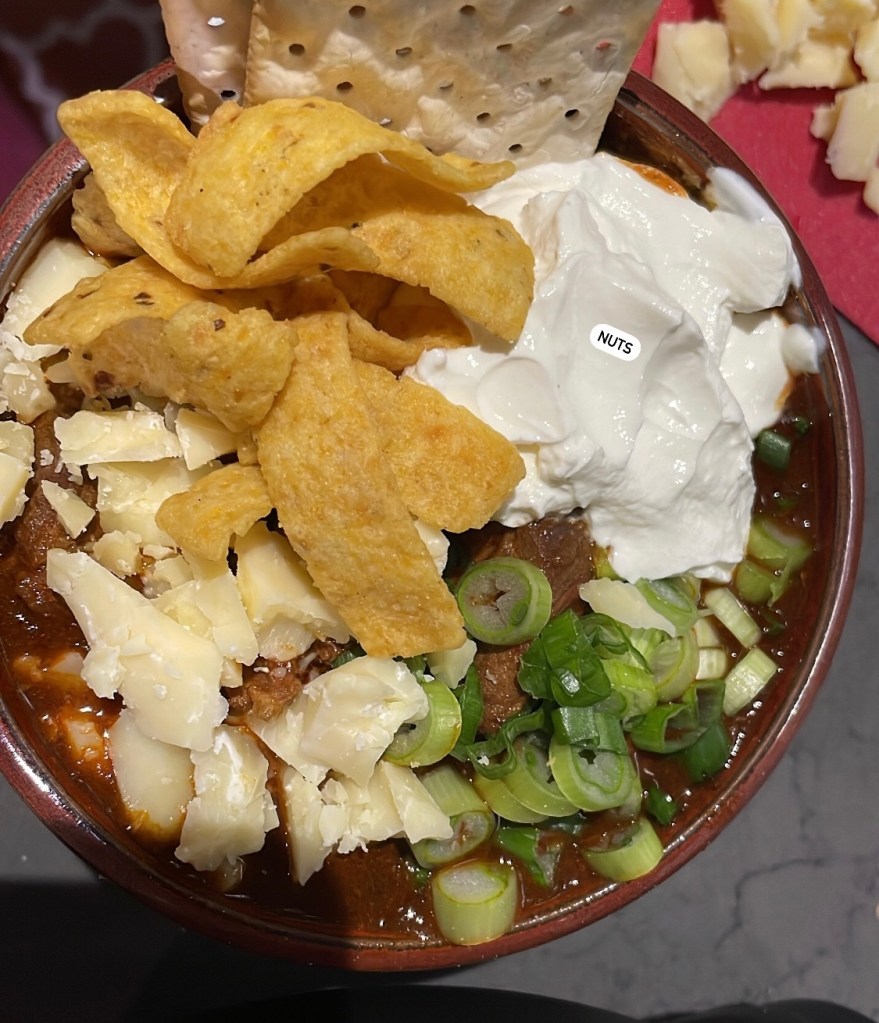
Bomb-Ass Pork Chili con Carne

I like to think about what is available to most home cooks, so I try my best to adapt my recipes to be widely accessible. Always feel free to contact me with any questions!

2 lb Boneless pork butt, cubed into 1 inch pieces

3 Yellow Onions, diced

2 Poblano peppers, diced with seeds removed

1 can of diced, charred tomatoes

2 T of tomato paste

4 each of 3 different dried chili peppers (I used ancho, mulato and guajillo for mild spice, smokiness and sweetness)

4 leaves of fresh Sage

3 sprigs of fresh oregano

1 can of Black or white beans

2 cups beef stock (or water with a tbsp of beef Better Than Bullion)

1 cup of Coffee

2 oz of chili infused mexican chocolate or 70% dark chocolate

1/2 cup white Vinegar

112 fl oz can of a Beer (look for something full flavored like Modelo and avoid light beers)

2 tsp Ground Cumin

2 tsp Coriander seed

2 tsp Celery salt

2 T Garlic powder

2 packets of Sazon (for the pork)

Neutral oil

Garnish with shredded cheddar, scallions, sour cream and Fritos

Equipment: blender, 5 qt pot/ dutch oven, a few bowls to hold prepped ingredients, 1 sheet pan for roasting the dried chilis, oven bits

  1. The morning you want to make this chili, season the chunks of pork with all of the Sazon seasoning and let it sit in a plastic bag in the fridge
  2. 4-8 hours later you want to get your pot/ dutch oven preheating over medium on the stove with 2 Tbsp of a neutral oil.
  3. Once hot, sear each piece of meat on 2 sides in 3-4 batches. If you overcrowd the pot it will steam rather than sear the bottom of the meat. Once all the meat is seared, reserve it on the side to be re-added later.
  4. With the heat still on medium, add another 2 T of oil and then the onions and poblano peppers. Stir occasionally.
  5. While the vegetables sauté, lightly toast the dried chilis in an oven set to 400℉ for 5 minutes. Flip the chilis and return them to the oven for another 5 minutes. If they start to smoke or burn at all, remove them from the oven.
  6. When the vegetables in the pot are lightly browned around their edges, add all of the ground spices, mix and toast for 30 seconds. Add the tomato paste and a T of oil and fry that for another minute or two, or until the paste is fragrant and has darkened slightly. Add the canned tomatoes.
  7. After the chilis are toasted and fragrant, remove the stems and seeds. Add the chilis to the jar of your blender with the vinegar, beer, coffee, stock/ better than bullion and water and let soak until the dried chiles have softened. Blend until completely smooth.
  8. Add the meat, chili puree, fresh herbs and chocolate to the pot with the vegetables and simmer the whole thing for at least 3 hours, checking every 30 mins or so. You can do this on the stove over medium/ low heat, but the best way to do this is to out your pot into a 350 ℉ oven with an oven save lid cracked slightly.
  9. After the meat is tender enough to cut with a fork and the sauce has thickened and reduced slightly, add the beans of your choice. Let the beans heat through for about 15 minutes and serve with preferred garnishes.