2 larger or 3 smaller scallions, cut thinly on a bias
1 cob’s worth of corn
8-10 mint leaves, chiffonade large ones and leave small ones whole
1 pack of tarragon (6-8 stems worth), picked and left whole
4 oz crumbled fresh feta
Salt to taste
A lot of freshly cracked Black pepper (at least 10 cranks, but to taste)
Equipment: large mixing bowl, 1 small mixing bowl, utility/ paring knife, cutting board, mandolin
Cut the ends off of the zucchini and carefully slice it from end to end with the mandolin. You should have long, thin ribbons of zucchini.
Cut the ends off of the squash as well, but cut it with the madoline into thin rounds. Combine with the zucchini ribbons and add a hefty pinch of salt. Carefully mix until everything is coated in salt and let it sit for 15 minutes.
While that’s sitting, mix the lemon juice, vinegar, olive oil, salt, and agave until fully incorporated. Slightly undersalt the dressing to account for the salty feta on top at the end.
Drain the liquid from the sliced zucchini and squash and add the mixed dressing along with your prepped tomatoes, scallions and corn.
Plate the the dressed salad and garnish with the fresh herbs, crumbled feta and black pepper.
Start by preheating a large pot with 1/4″ of oil over medium heat until the oil shimmers. With their cut sides facing downward, place the shallots, garlic and lemon into the oil. Cook until thoroughly browned. Remove everything from the pot and reserve.
Char your poblano pepper under your broiler or with a butane torch. Your end result should have all of the chile’s skin black, blistered and starting to separate from its flesh. Place the freshly charred poblano in a metal bowl and cover with a pot lid or plastic wrap and let it steam for 10 minutes. At this point, rub the burnt skin off using a dry paper towel. Cut off the stem and remove as many seeds as possible. Place aside with the other seared aromatics.
After checking your beans for debris, add them to the pot along with the 1/2 cup of olive oil, Sazon, oregano, chili flakes, paprika, four 4-finger pinches of salt and 10-12 cranks of freshly ground black pepper (approximately 2 heaping tsp). Fill the pot with water so that the beans are covered by at least 2 inches.
Add your reserved fruit and veg to the top and bring the whole thing to a boil. At this point, reduce the heat to a gently bubbling simmer.
The beans will need to cook between 2.5-4 hours, or until they are tender all the way through. Be sure to keep your eye on the water level, making sure to cover the beans in water whenever needed.
Remove the aromatics from the beans. At this point, you have 2 choices: you can dispose of the aromatics to keep your broth clearer and thinner, or you can blend them in a food processor (careful to de-seed the lemons beforehand) and add them back to the beans. The latter makes your broth thicker and more unctuous. All the flavor has been cooked out of the aromatics, so this step is primarily for texture and appearance.
Turn the heat off on your burner and add your apple cider vinegar and mustard oil. Mix thoroughly and taste your beans. At this point you want to add more salt/ pepper/ vinegar a little at a time until they are seasoned to your liking.
Enjoy with rice or alone as a delicious vegan protein source!
1 cup/ 80 g shredded aged white cheddar (look for labels that describe it as tasting similar to parmesan)
1 stick softened, unsalted butter
1 large head of roasted garlic (about 8 decent sized cloves)
2 tsp chopped Calabrian chilis (use 1 tsp if you don’t want it as spicy)
zest of 1 grapefruit (or 2 lemons)
a 4-finger pinch of flaky salt
Combine all of the dry ingredients with the butter and cheese and mix thoroughly. Stir in 1 cup of cold buttermilk and mix until no dry spots remain.
Wrap the dough in plastic and rest in the fridge for 30 minutes. After this time, lightly flour your clean countertop and roll out the dough until it is 1/2 inch thick. Fold like a triple-folded pamphlet and roll out again the same way, folding the same way at the end. Try to keep the edges as squared away as possible.
Cover and rest the dough for 15 minutes. Then cut into 8 even squares/ rectangles. Place on a sheet tray with a finger width of space between each one.
Brush with the egg wash and bake at 400℉ for 10- 15 minutes, or until golden brown on top and bottom.
Make your compound butter. Wrap in plastic to chill. Once solid, cut into square pieces to place inside of your warm, sliced biscuits.
Roll out some dough (about 1/8th of the recipe) without flour until about 1/2″ thick and wrap around 3 asparagus spears. Be sure to press the dough together once wrapped to keep them sealed.
Once you’ve rolled up all the asparagus, brush the asparagus with half of your melted butter.
Mix together your ground spices and sprinkle onto the buttered asparagus.
Proof your twigs in a blanket under a clean kitchen towel or plastic wrap until the dough slowly bounces back after a gentle poke, approximately 30 minutes.
Bake at 400℉ for 20 mins, or until nicely browned all around.
Brush the dough with the remaining butter and sprinkle on some flaky salt. Cool under a clean kitchen towel once baked to keep them soft.
I like to think about what is available to most home cooks, so I try my best to adapt my recipes to be widely accessible. Always feel free to contact me with any questions!
2 lb Boneless pork butt, cubed into 1 inch pieces
3 Yellow Onions, diced
2 Poblano peppers, diced with seeds removed
1 can of diced, charred tomatoes
2 T of tomato paste
4 each of 3 different dried chili peppers (I used ancho, mulato and guajillo for mild spice, smokiness and sweetness)
4 leaves of fresh Sage
3 sprigs of fresh oregano
1 can of Black or white beans
2 cups beef stock (or water with a tbsp of beef Better Than Bullion)
1 cup of Coffee
2 oz of chili infused mexican chocolate or 70% dark chocolate
1/2 cup white Vinegar
112 fl oz can of a Beer (look for something full flavored like Modelo and avoid light beers)
2 tsp Ground Cumin
2 tsp Coriander seed
2 tsp Celery salt
2 T Garlic powder
2 packets of Sazon (for the pork)
Neutral oil
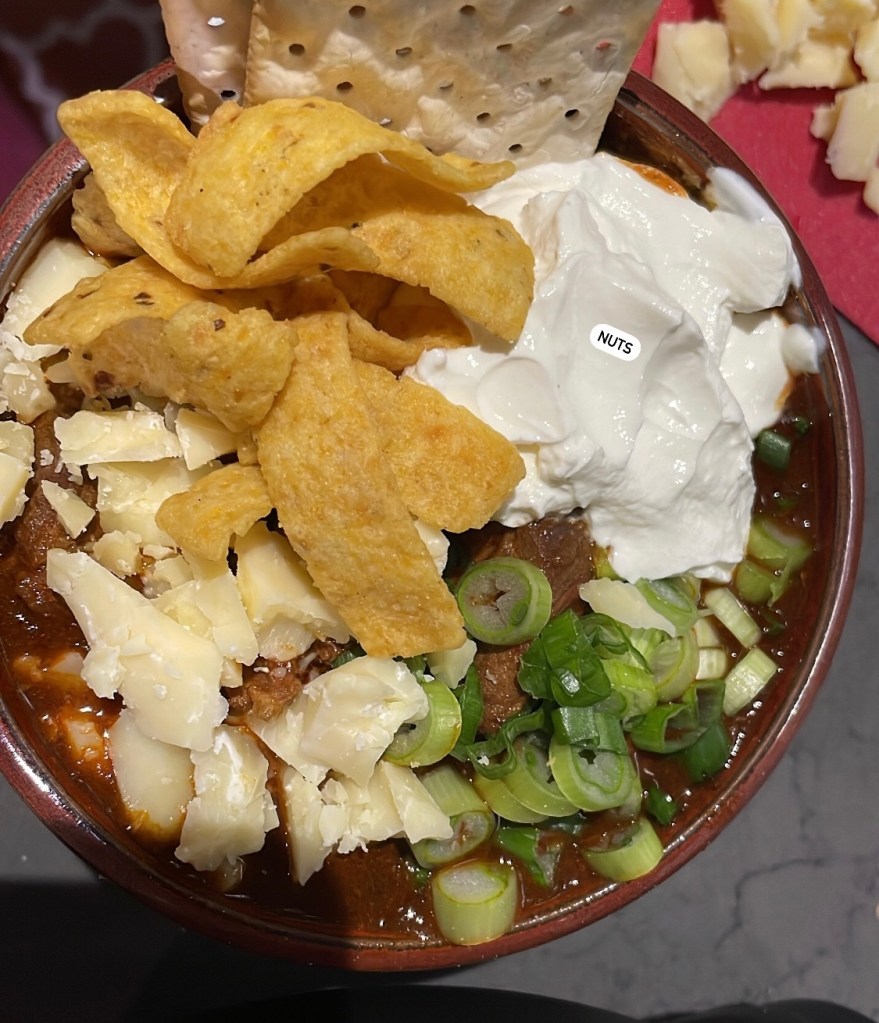
Garnish with shredded cheddar, scallions, sour cream and Fritos
Equipment: blender, 5 qt pot/ dutch oven, a few bowls to hold prepped ingredients, 1 sheet pan for roasting the dried chilis, oven bits
The morning you want to make this chili, season the chunks of pork with all of the Sazon seasoning and let it sit in a plastic bag in the fridge
4-8 hours later you want to get your pot/ dutch oven preheating over medium on the stove with 2 Tbsp of a neutral oil.
Once hot, sear each piece of meat on 2 sides in 3-4 batches. If you overcrowd the pot it will steam rather than sear the bottom of the meat. Once all the meat is seared, reserve it on the side to be re-added later.
With the heat still on medium, add another 2 T of oil and then the onions and poblano peppers. Stir occasionally.
While the vegetables sauté, lightly toast the dried chilis in an oven set to 400℉ for 5 minutes. Flip the chilis and return them to the oven for another 5 minutes. If they start to smoke or burn at all, remove them from the oven.
When the vegetables in the pot are lightly browned around their edges, add all of the ground spices, mix and toast for 30 seconds. Add the tomato paste and a T of oil and fry that for another minute or two, or until the paste is fragrant and has darkened slightly. Add the canned tomatoes.
After the chilis are toasted and fragrant, remove the stems and seeds. Add the chilis to the jar of your blender with the vinegar, beer, coffee, stock/ better than bullion and water and let soak until the dried chiles have softened. Blend until completely smooth.
Add the meat, chili puree, fresh herbs and chocolate to the pot with the vegetables and simmer the whole thing for at least 3 hours, checking every 30 mins or so. You can do this on the stove over medium/ low heat, but the best way to do this is to out your pot into a 350 ℉ oven with an oven save lid cracked slightly.
After the meat is tender enough to cut with a fork and the sauce has thickened and reduced slightly, add the beans of your choice. Let the beans heat through for about 15 minutes and serve with preferred garnishes.
I like to think about what is available to most home cooks, so I try my best to adapt my recipes to be widely accessible. Always feel free to contact me with any questions!
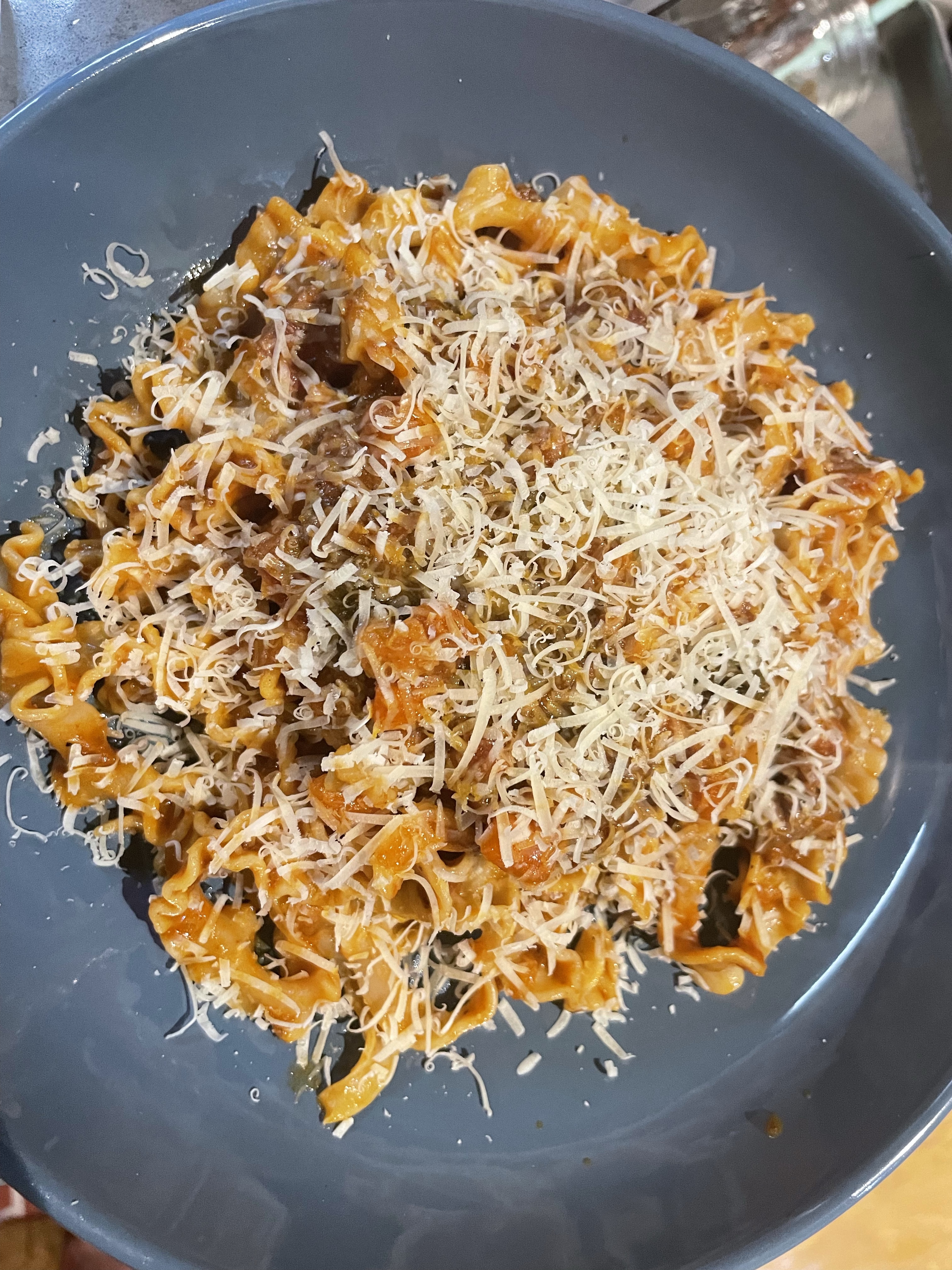
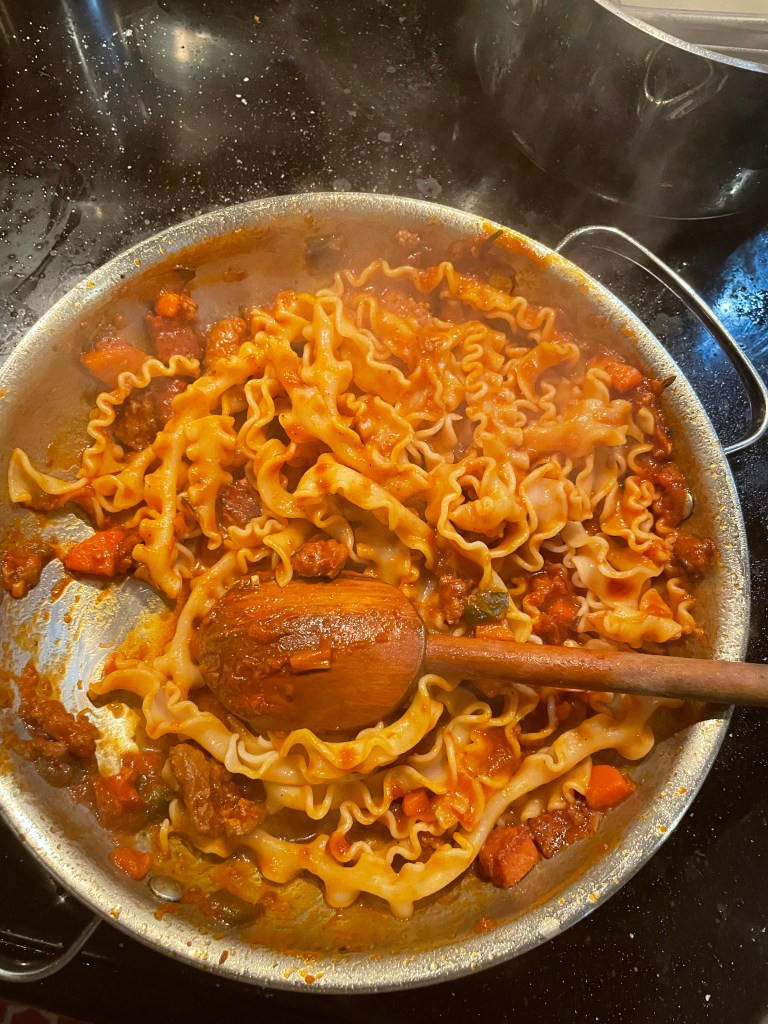
For this iteration I used the mafaldine pasta shape and ground lamb. My favorite version of this dish however used a thick lamb leg steak and orzo pasta. I dry brined the steak in my fridge for 2 days by liberally salting all sides of it and letting it sit on a paper towel lined plate uncovered in my fridge. The surface was dry and seared beautifully. The dry brining magnified the meat’s flavor, so go the extra mile if you can.
1 pound lamb leg steak OR 1 pound of ground lamb
4 oz of a cured meat, cut into lardon (cubes) about a quarter/half inch thick; for my tests I used guanciale and smoked coppa, but pancetta or slab bacon would work as well
Extra Virgin Olive oil
Salt and pepper
4 cloves of garlic, thinly sliced
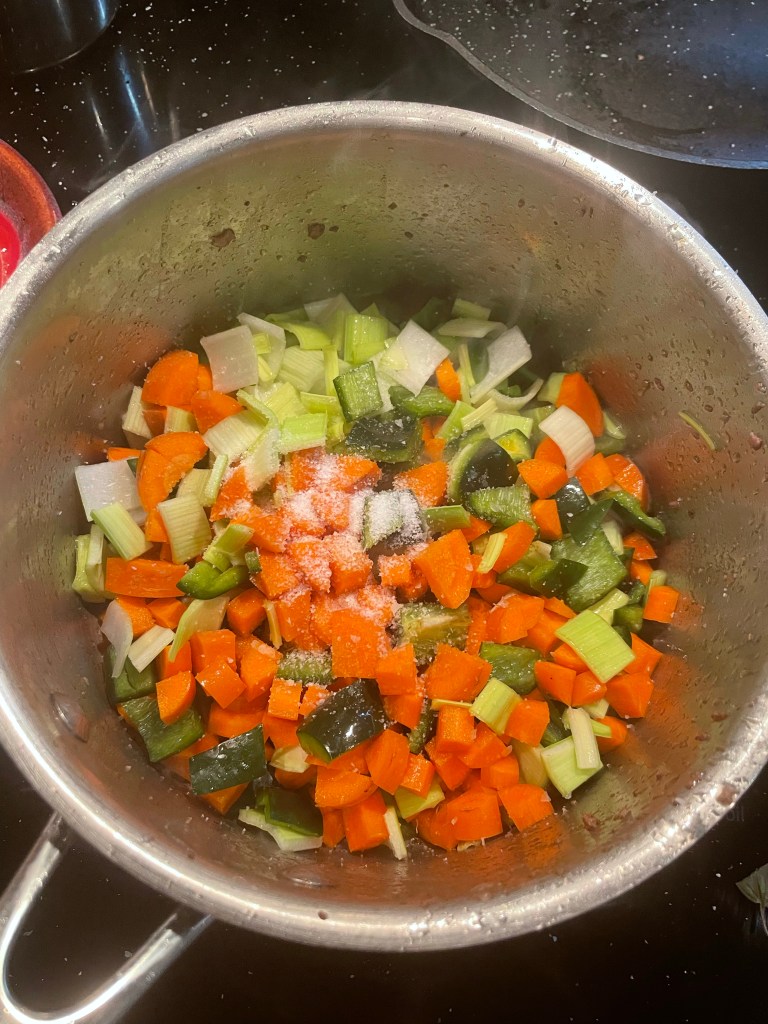
1 poblano pepper, seeded and small/medium diced (about 1/2 in x 1/2 in)
2 medium sized carrots, small/medium diced
A 4 inch segment from the white of a leek, small/medium diced *(remember to clean your leeks! Soak them in enough cold water so that they float to the top and then skim them off the top, leaving the dirt behind at the bottom of the bowl)
2 T tomato paste, double concentrated if possible
3/4 cup Red wine
1 1/2 cups of passata/ tomato puree
Just enough water or stock (any stock, but lamb or beef is best) to help it come together; I used just over a half cup
Bouquet of fresh oregano, thyme, rosemary and bay leaf (tie it all together with some butcher’s twine)
1 tsp red pepper flakes
1 T cold butter
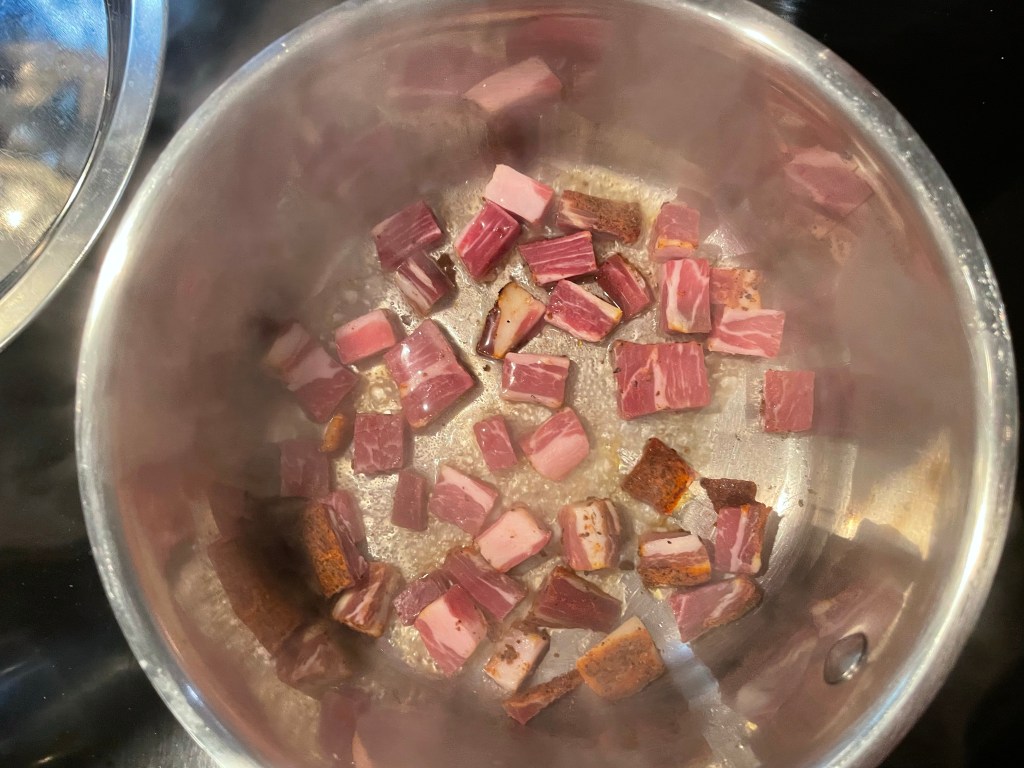
1. Add the cubes of cured pork into a pot with a small amount of water. Turn the heat to medium-low and render the fat out of it.
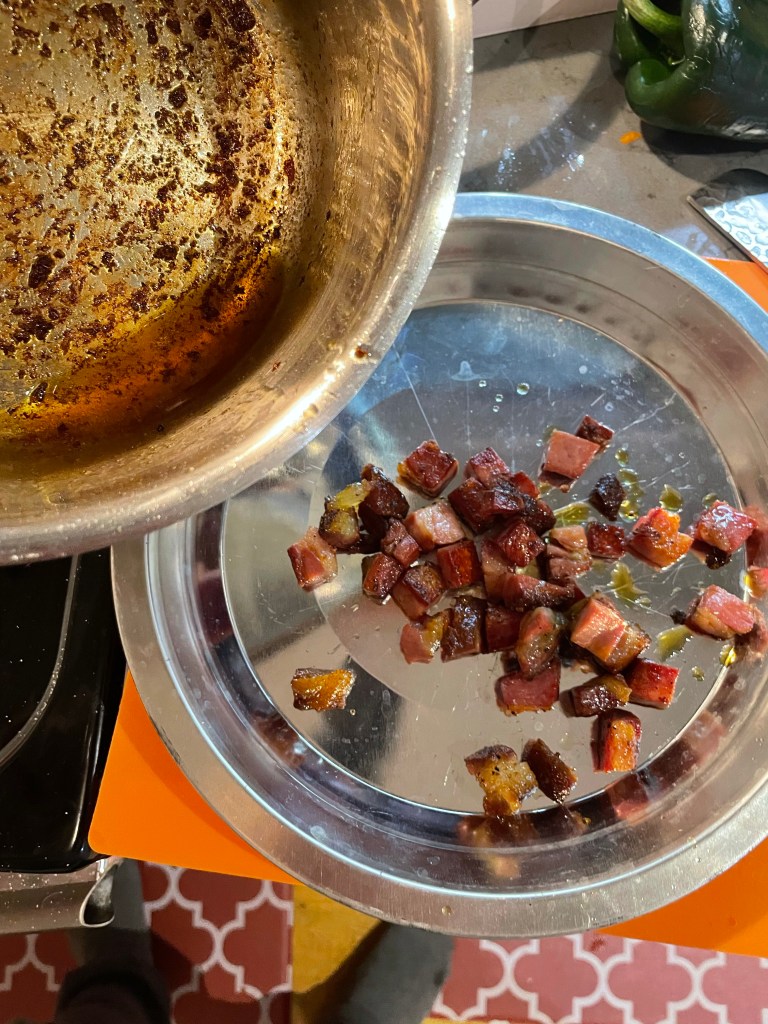
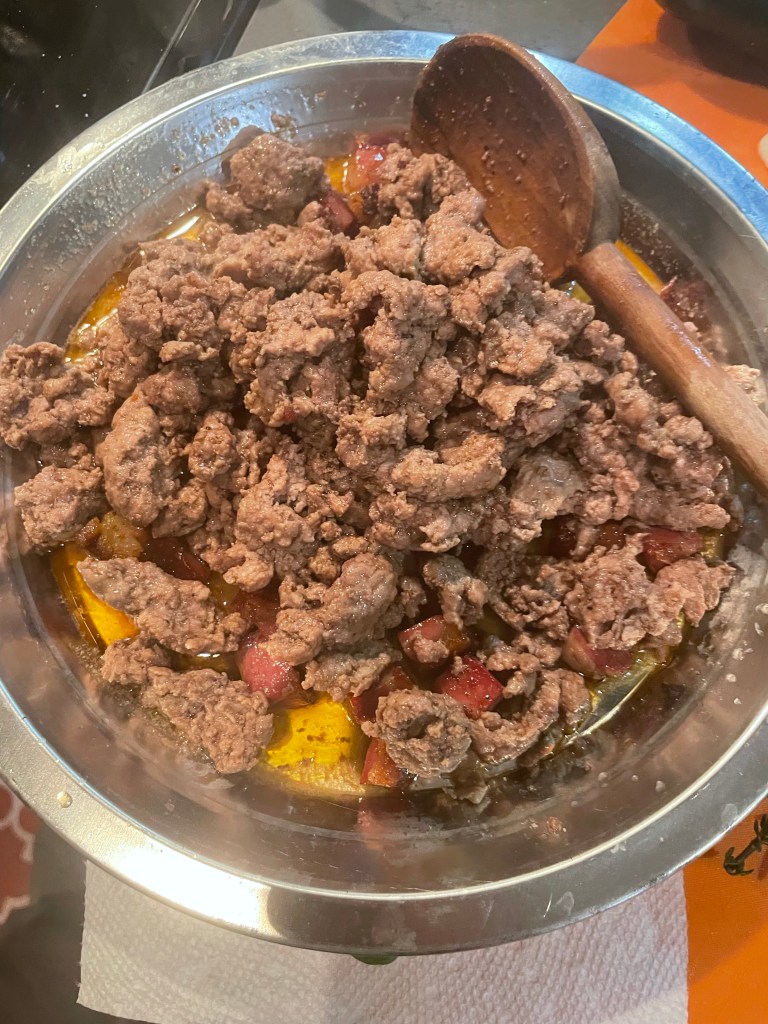
2. Once the water has boiled out of the pot and what is left is browned meat and a pool of flavorful fat, remove the meat and reserve to a metal pan (no paper towels or fat draining necessary).
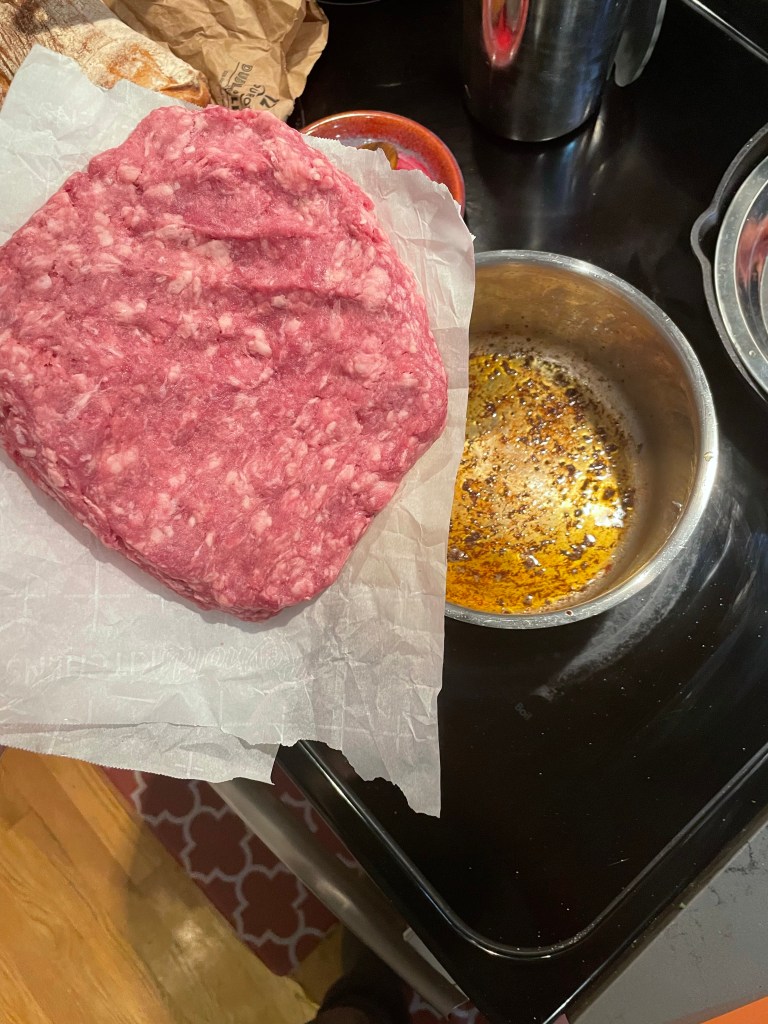
3. Turn the burner to medium high and add your lamb of choice. It should be liberally seasoned with salt. Sear the lamb until dark brown on one side and carefully flip it. If you’re using ground meat, break the meat up into small chunks with a wooden spoon.
If you opt for the quicker and easier ground lamb route, form the meat into a shape similar to the pot/pan you’re using
4. Lower the heat as low as it can go once the meat is sufficiently browned and then remove it from the pot. It can wait with the lardon in its metal pan.
5. Adjust the heat to medium and add enough olive oil to easily cover the bottom of the pan. Add all of the vegetables once the oil shimmers
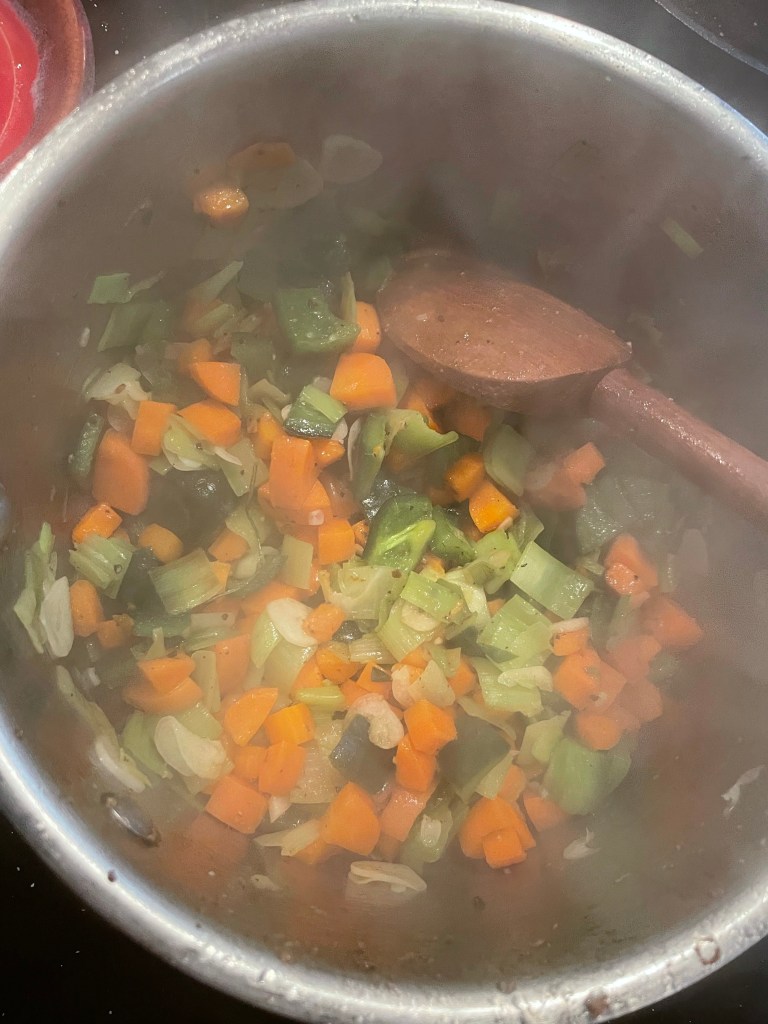
6. Sweat the vegetables and garlic until mostly cooked through, be careful to avoid browning if possible (turn the heat down as needed)
7. Clear out a space in the middle of your pan with your wooden spoon, add a little more oil and fry your tomato paste in it. Stir everything together, making sure to coat all the vegetables in the tomato paste.
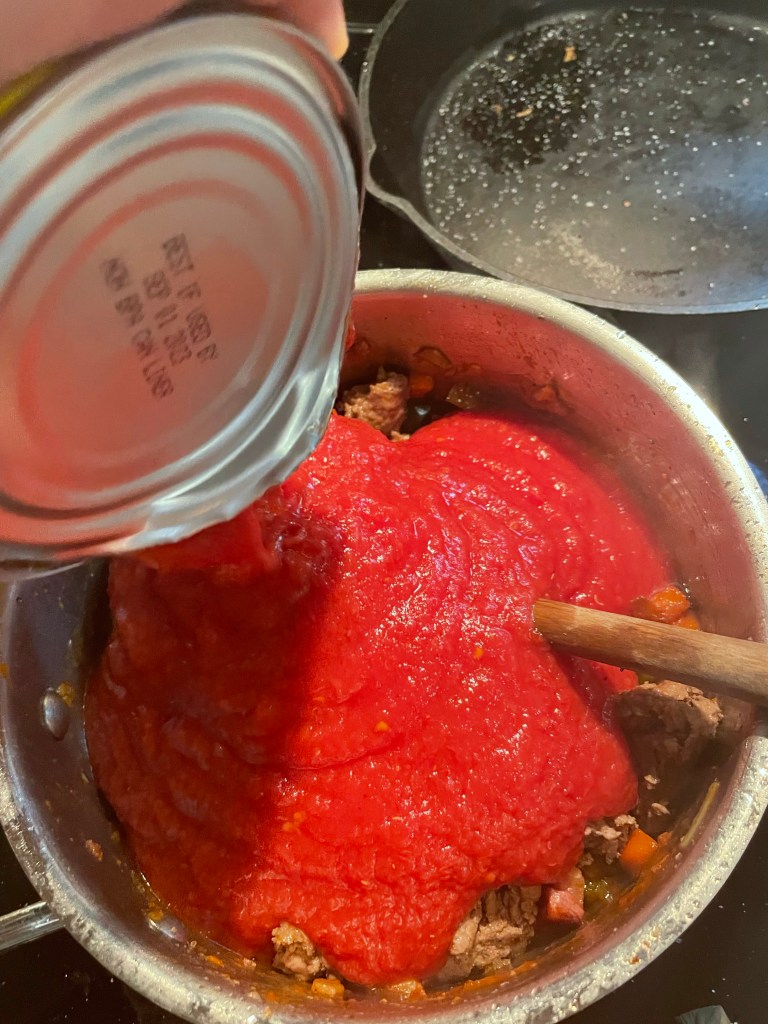
8. Add the red wine and cook that until it has reduced by half. Then add the tomato puree and the stock/ water
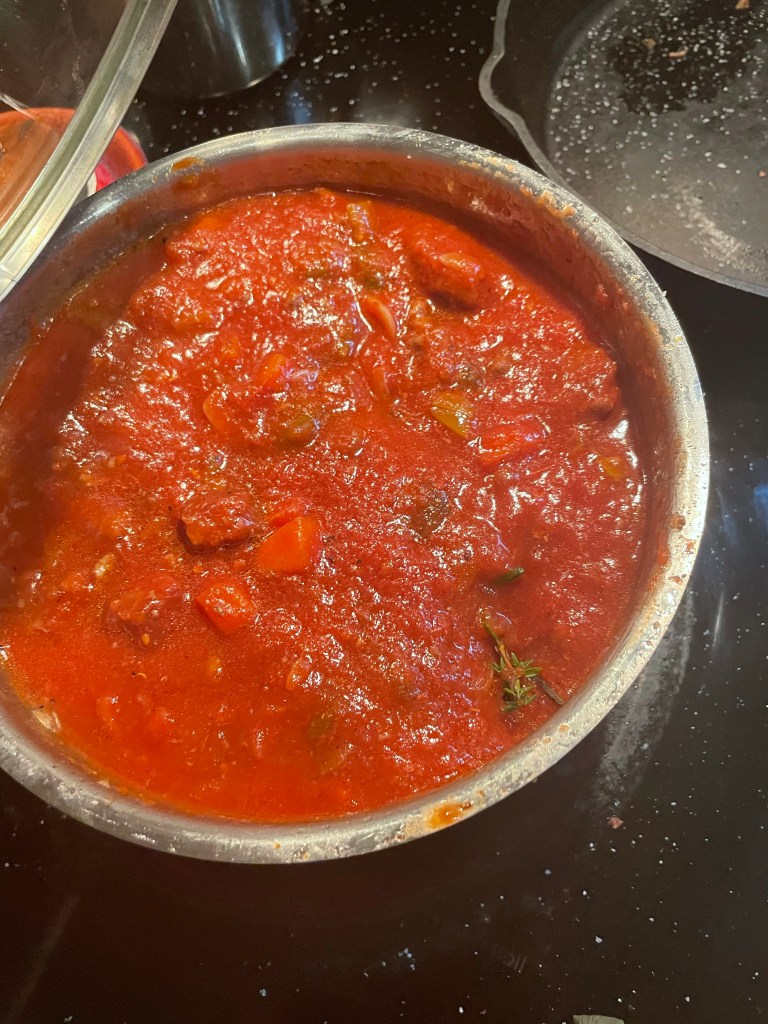
9. Add the, herbs and red pepper flakes and meat as well as about 10 cranks of fresh black pepper
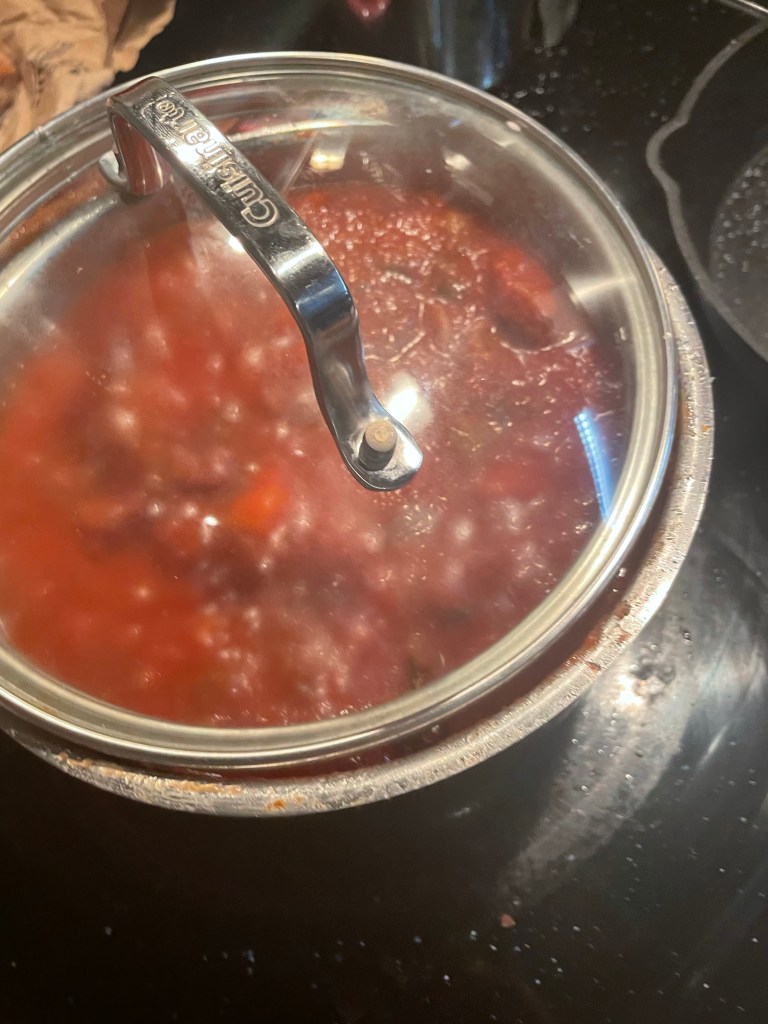
10. Cook on low with the lid of the pot cracked for a few hours, or until the sauce has reduced and thickened. If you used a leg steak, the meat should break up and easily mix into the sauce.
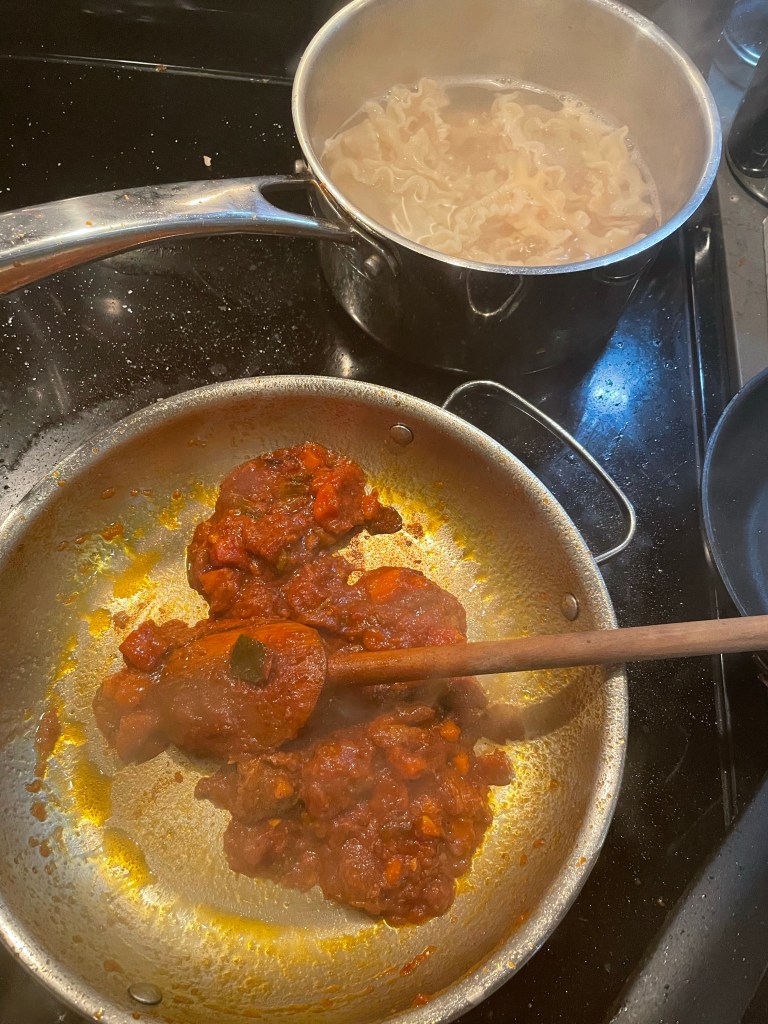
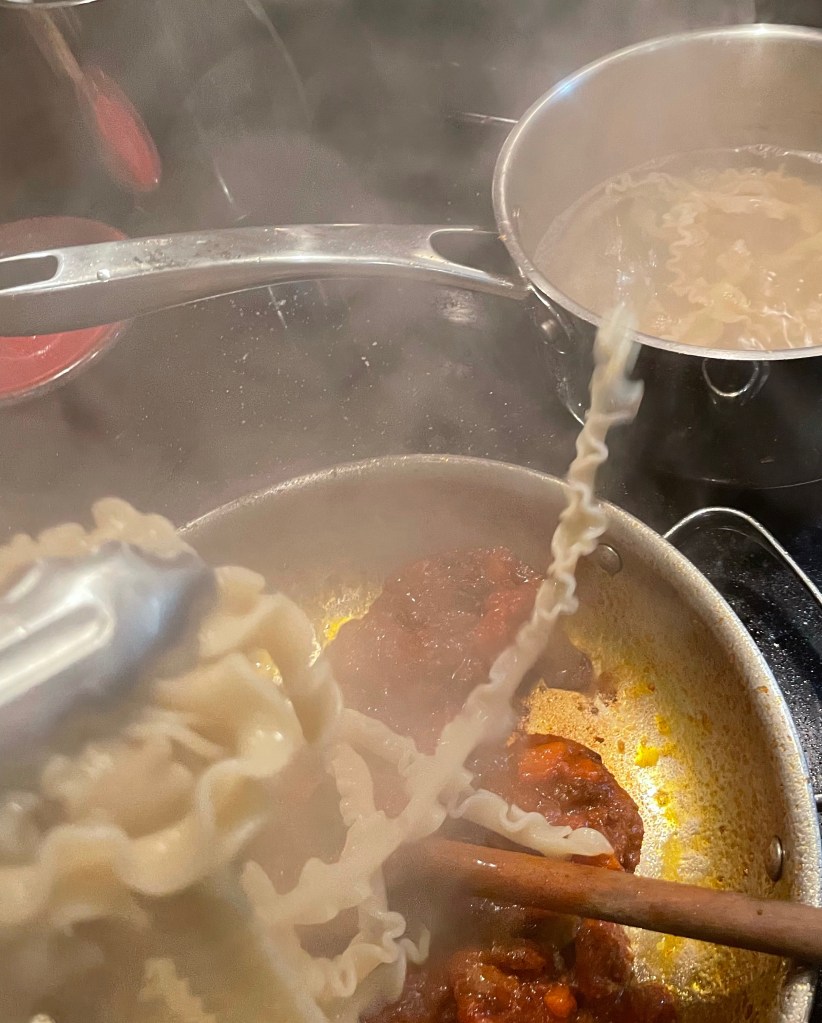
11. To use in pasta, cook the pasta to package instructions in water that is just saltier than tears. When the it’s just a couple minutes away from being cooked through, heat a pan with enough oil to barely cover the bottom of it. Add a half cup or so of ragu per serving of pasta (just enough to coat the amount of pasta you’re using, not too much) and reheat over medium-low just until the pasta is done (careful not to over burn the bottom)
The sauce tastes best after it sits in the fridge for overnight, so make the sauce ahead if you can
12. Once al dente (or however you like it), add the pasta to the sauce and toss vigorously until coated. Add about a quarter/ half cup of pasta water and toss again. Season to taste with salt with more than yiu think you might need. The cold butter added at the end will balance the flavors perfectly.
13. Right before serving, turn the heat off and add the cold butter to the pasta and toss vigorously. Plate as desired and grate part on top to serve
 Sam’s Food Blog