Lamb Ragu

I like to think about what is available to most home cooks, so I try my best to adapt my recipes to be widely accessible. Always feel free to contact me with any questions!
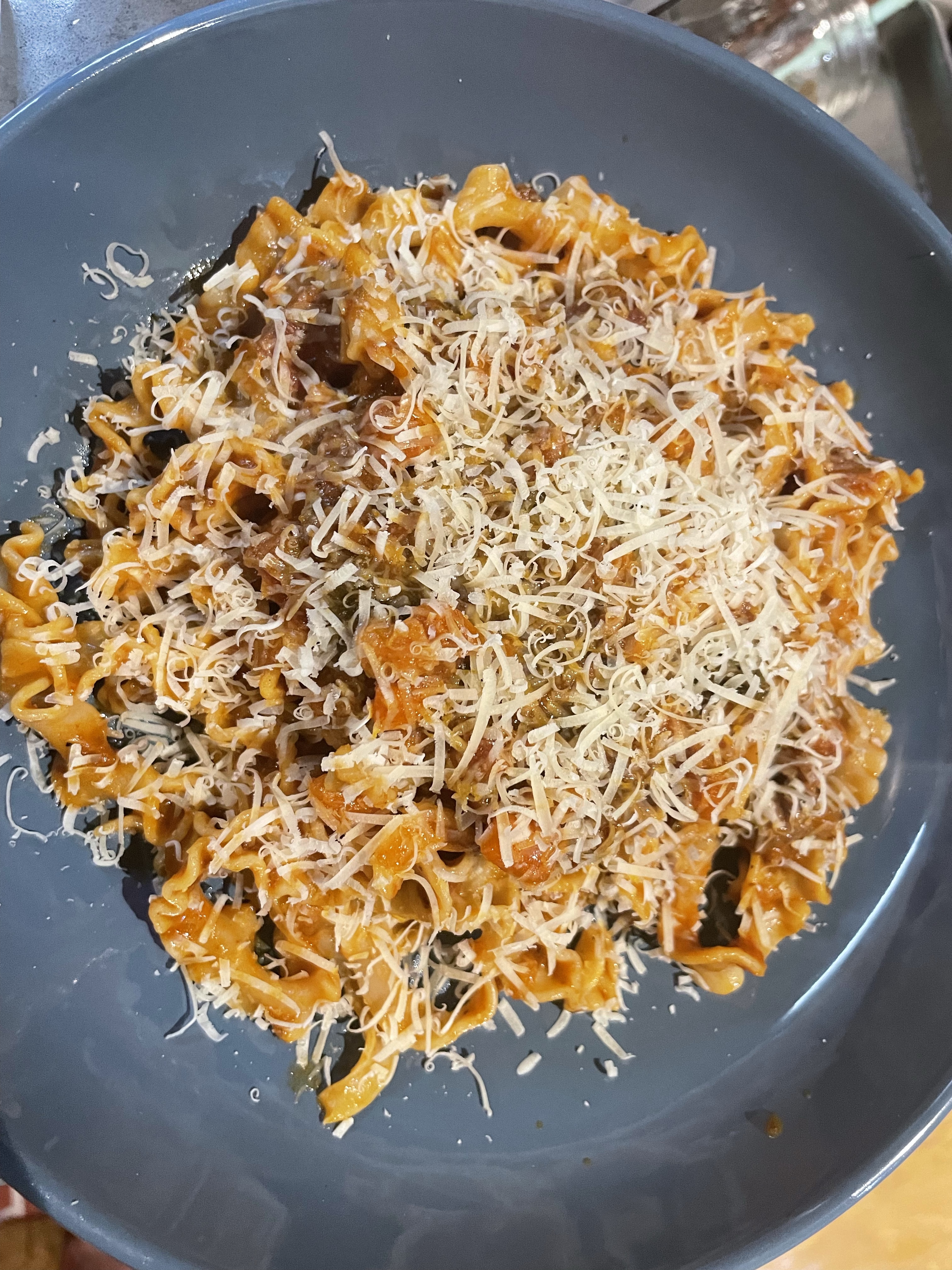

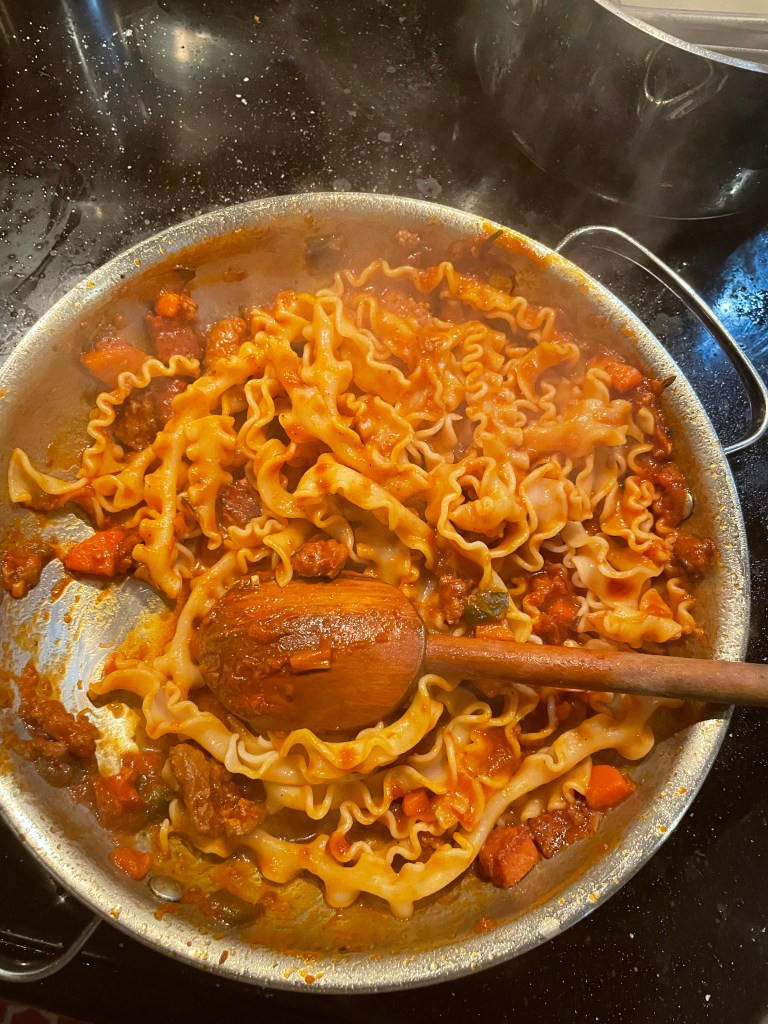
For this iteration I used the mafaldine pasta shape and ground lamb. My favorite version of this dish however used a thick lamb leg steak and orzo pasta. I dry brined the steak in my fridge for 2 days by liberally salting all sides of it and letting it sit on a paper towel lined plate uncovered in my fridge. The surface was dry and seared beautifully. The dry brining magnified the meat’s flavor, so go the extra mile if you can.

1 pound lamb leg steak OR 1 pound of ground lamb

4 oz of a cured meat, cut into lardon (cubes) about a quarter/half inch thick; for my tests I used guanciale and smoked coppa, but pancetta or slab bacon would work as well

Extra Virgin Olive oil

Salt and pepper

4 cloves of garlic, thinly sliced

1 poblano pepper, seeded and small/medium diced (about 1/2 in x 1/2 in)

2 medium sized carrots, small/medium diced

A 4 inch segment from the white of a leek, small/medium diced *(remember to clean your leeks! Soak them in enough cold water so that they float to the top and then skim them off the top, leaving the dirt behind at the bottom of the bowl)

2 T tomato paste, double concentrated if possible

3/4 cup Red wine

1 1/2 cups of passata/ tomato puree

Just enough water or stock (any stock, but lamb or beef is best) to help it come together; I used just over a half cup

Bouquet of fresh oregano, thyme, rosemary and bay leaf (tie it all together with some butcher’s twine)

1 tsp red pepper flakes

1 T cold butter

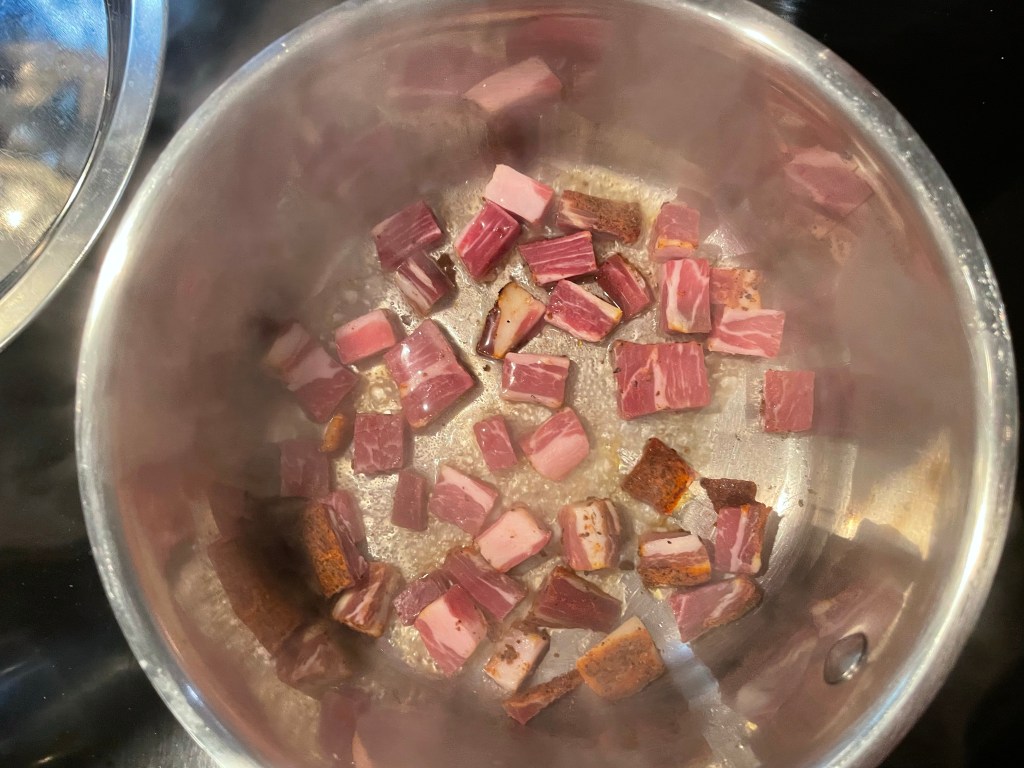
1. Add the cubes of cured pork into a pot with a small amount of water. Turn the heat to medium-low and render the fat out of it.
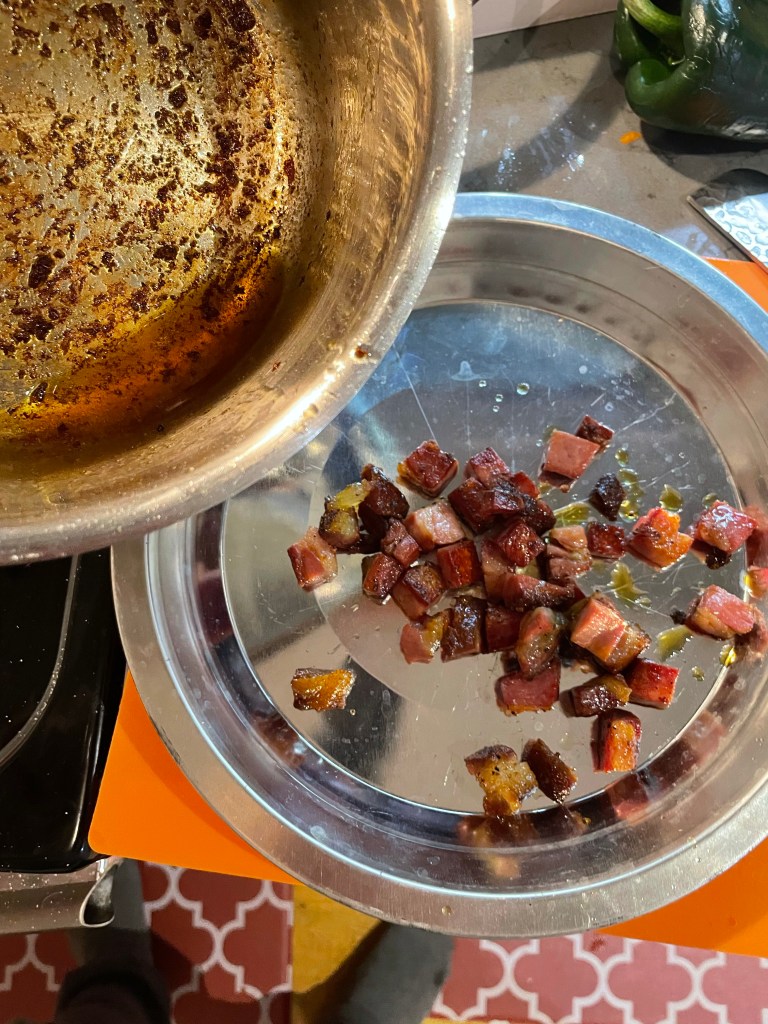
2. Once the water has boiled out of the pot and what is left is browned meat and a pool of flavorful fat, remove the meat and reserve to a metal pan (no paper towels or fat draining necessary).
3. Turn the burner to medium high and add your lamb of choice. It should be liberally seasoned with salt. Sear the lamb until dark brown on one side and carefully flip it. If you’re using ground meat, break the meat up into small chunks with a wooden spoon.
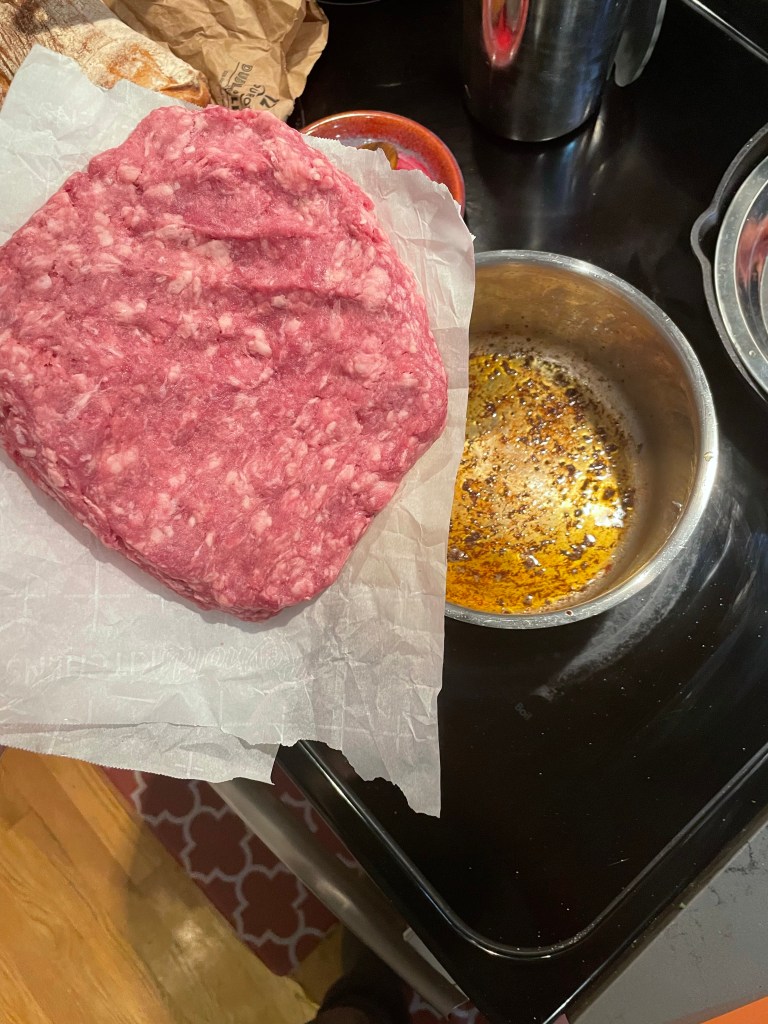
If you opt for the quicker and easier ground lamb route, form the meat into a shape similar to the pot/pan you’re using

4. Lower the heat as low as it can go once the meat is sufficiently browned and then remove it from the pot. It can wait with the lardon in its metal pan.
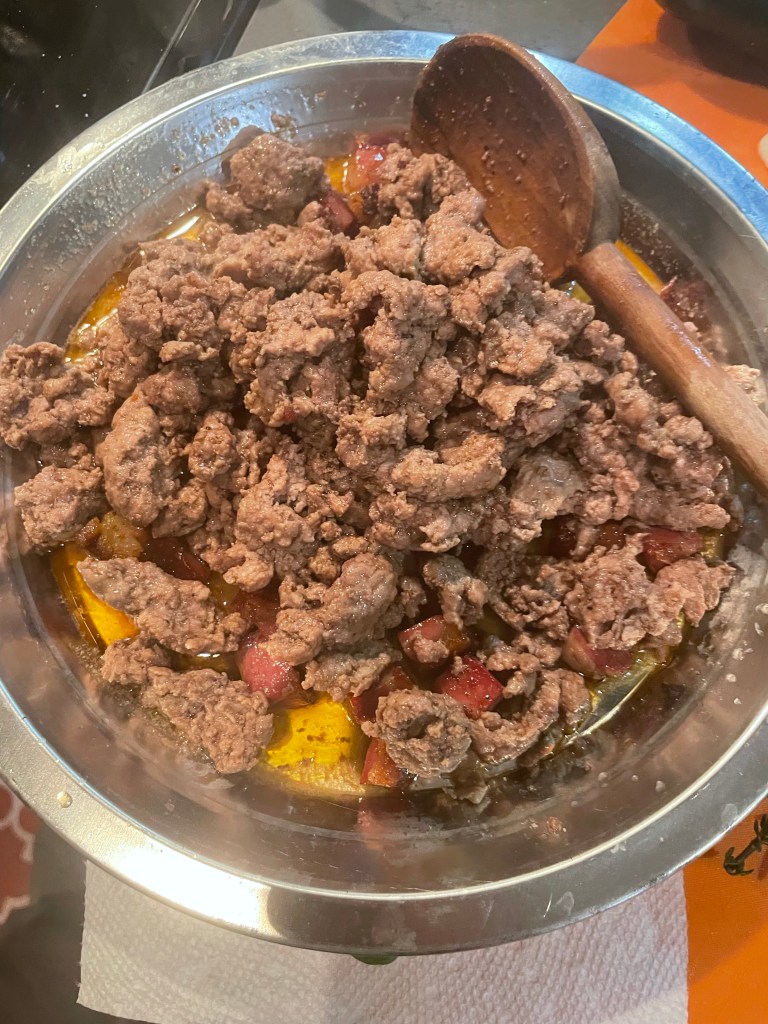
5. Adjust the heat to medium and add enough olive oil to easily cover the bottom of the pan. Add all of the vegetables once the oil shimmers
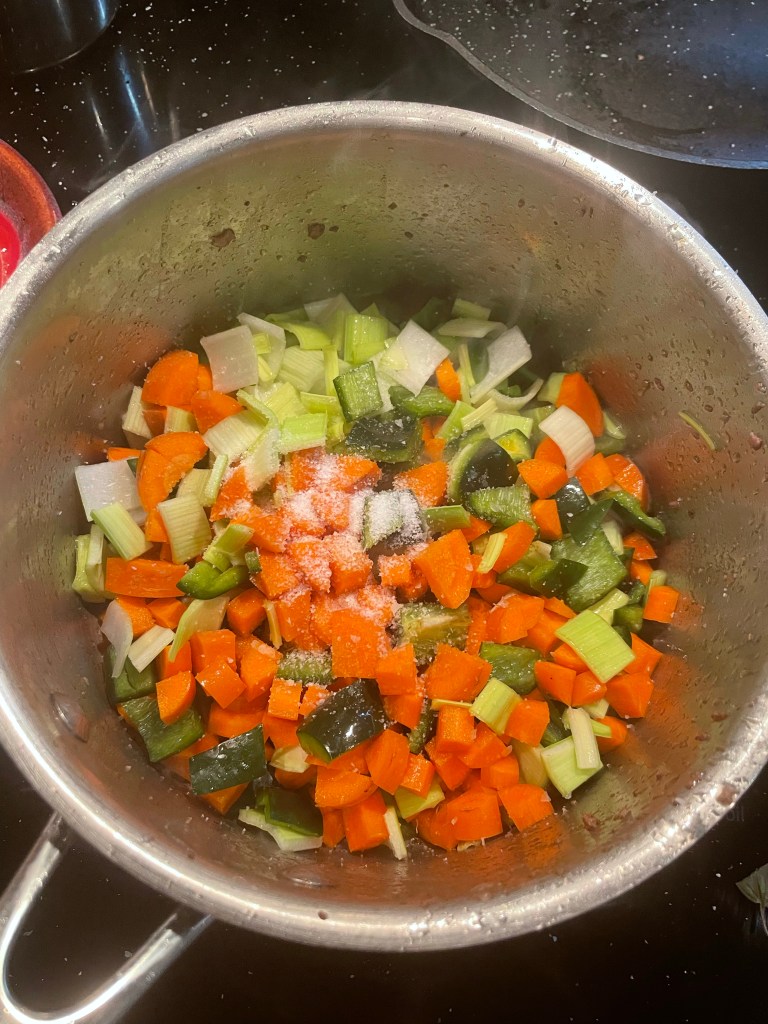
6. Sweat the vegetables and garlic until mostly cooked through, be careful to avoid browning if possible (turn the heat down as needed)
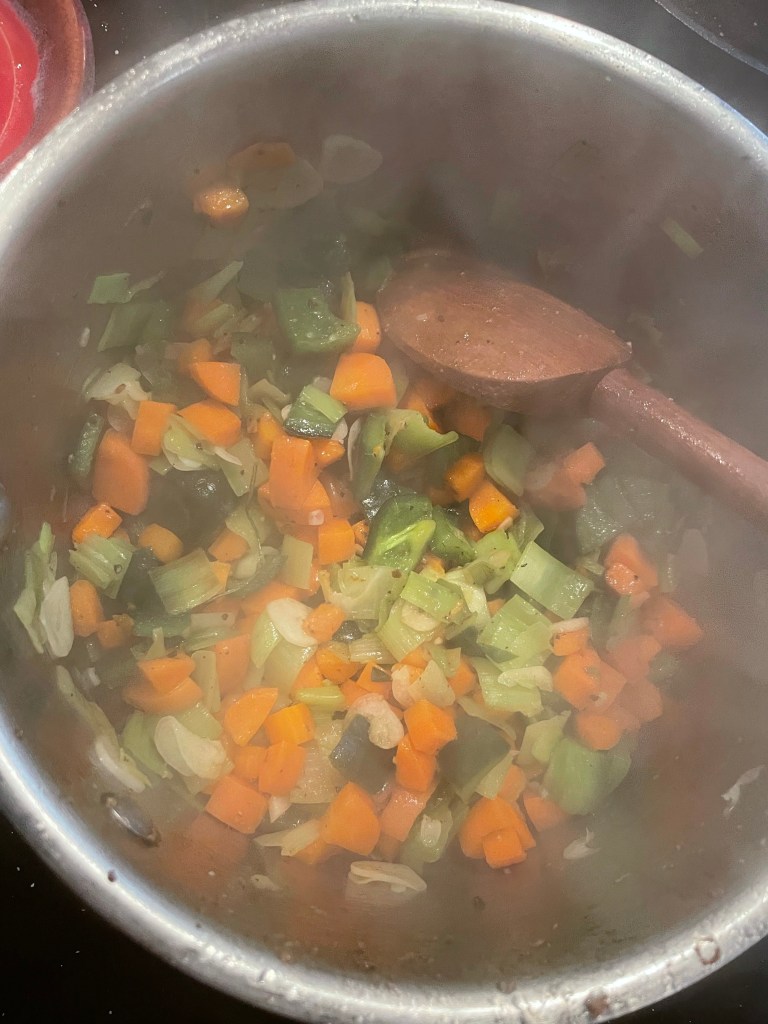
7. Clear out a space in the middle of your pan with your wooden spoon, add a little more oil and fry your tomato paste in it. Stir everything together, making sure to coat all the vegetables in the tomato paste.

8. Add the red wine and cook that until it has reduced by half. Then add the tomato puree and the stock/ water
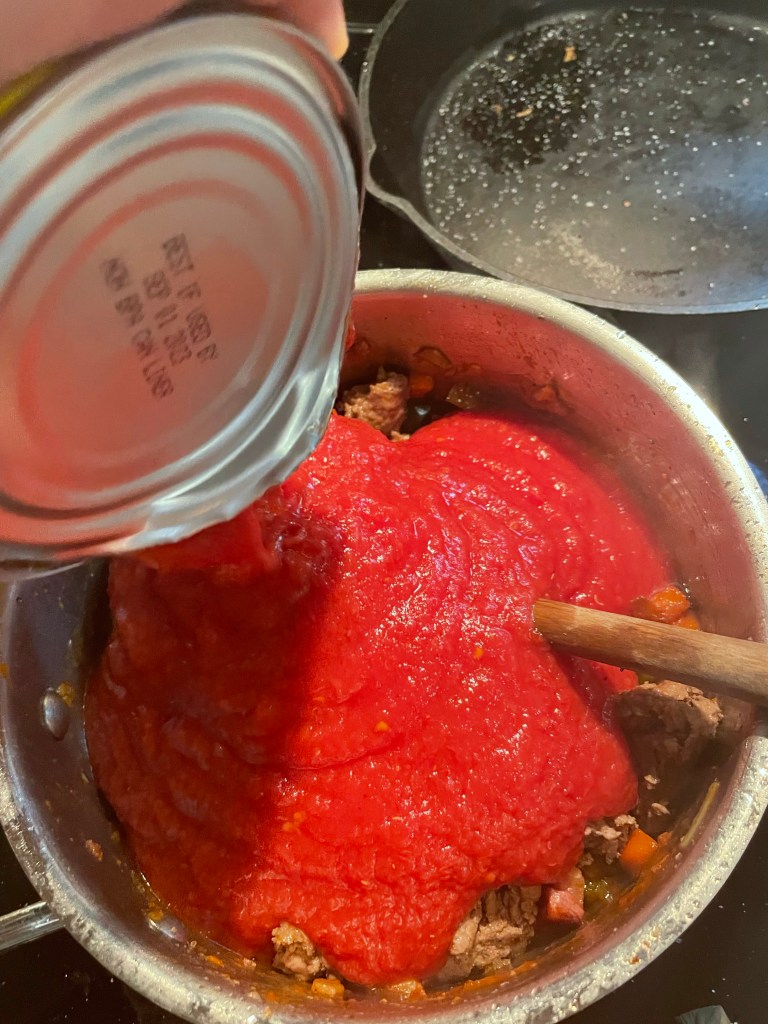
9. Add the, herbs and red pepper flakes and meat as well as about 10 cranks of fresh black pepper
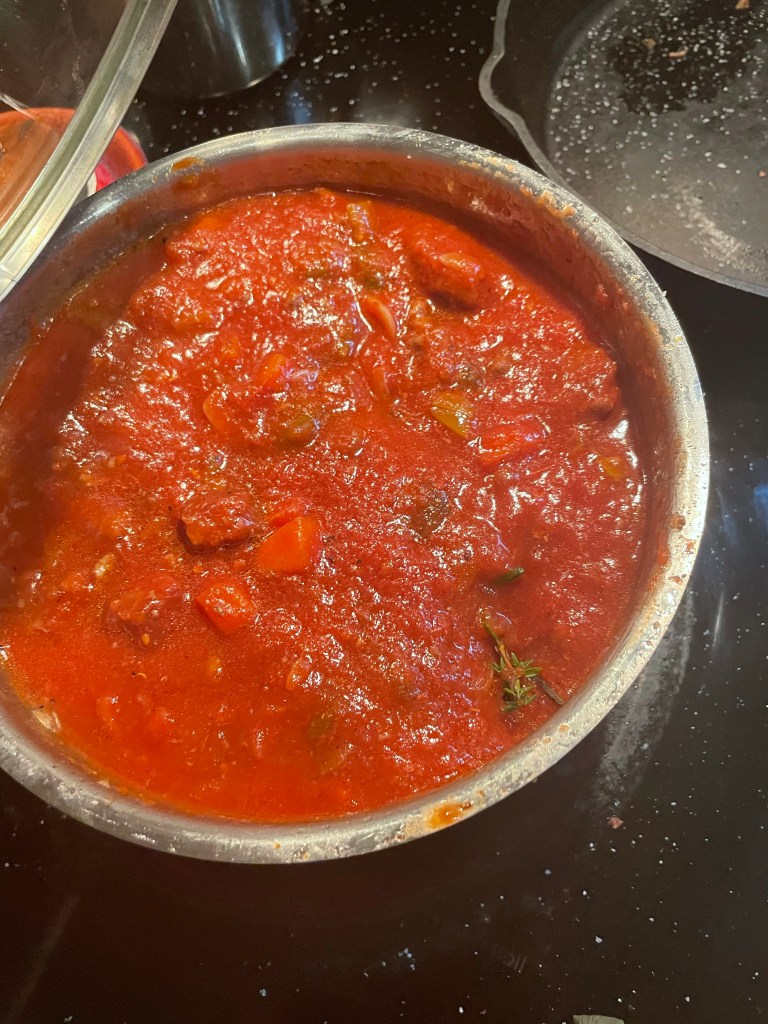
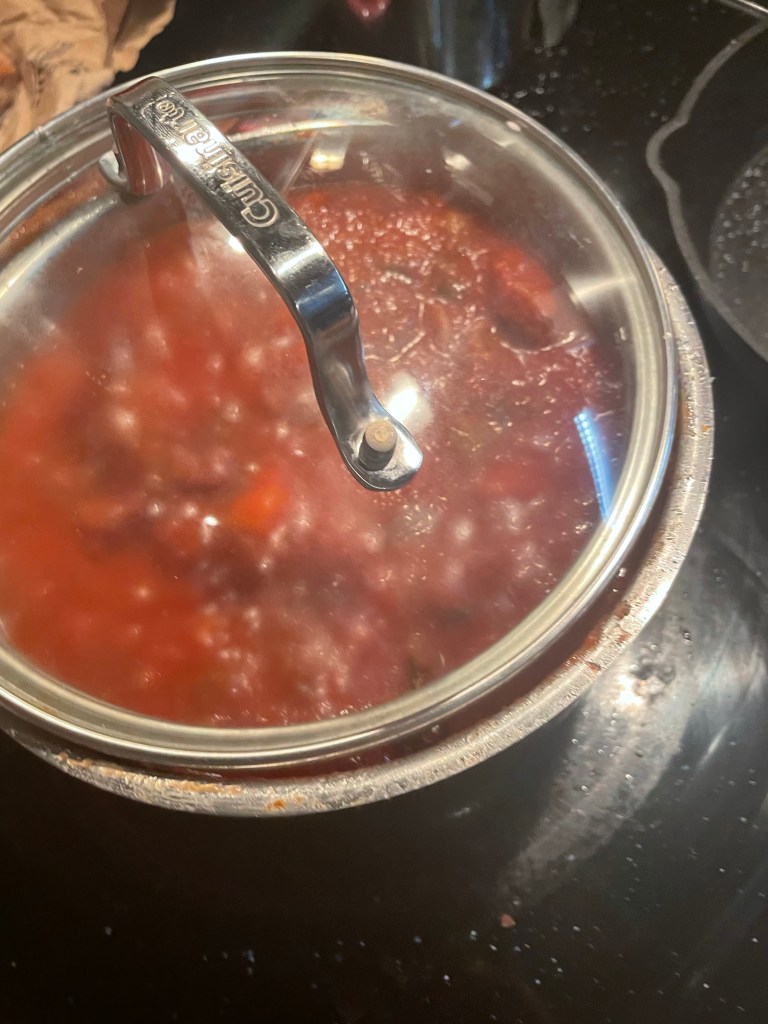
10. Cook on low with the lid of the pot cracked for a few hours, or until the sauce has reduced and thickened. If you used a leg steak, the meat should break up and easily mix into the sauce.
11. To use in pasta, cook the pasta to package instructions in water that is just saltier than tears. When the it’s just a couple minutes away from being cooked through, heat a pan with enough oil to barely cover the bottom of it. Add a half cup or so of ragu per serving of pasta (just enough to coat the amount of pasta you’re using, not too much) and reheat over medium-low just until the pasta is done (careful not to over burn the bottom)
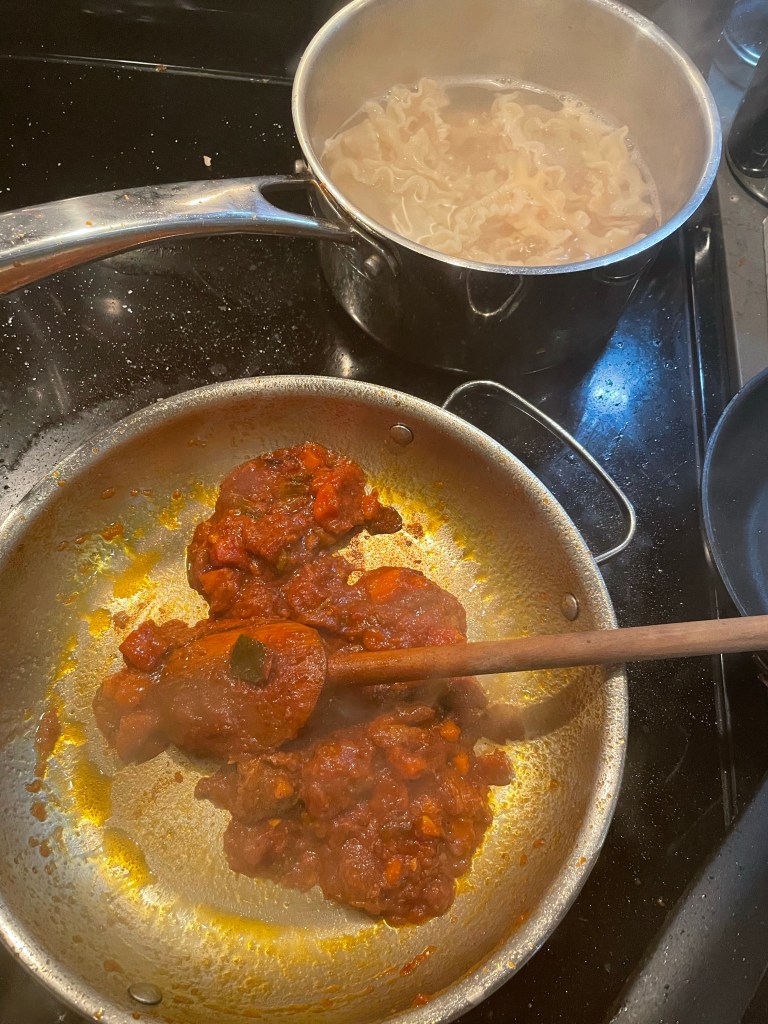
The sauce tastes best after it sits in the fridge for overnight, so make the sauce ahead if you can

12. Once al dente (or however you like it), add the pasta to the sauce and toss vigorously until coated. Add about a quarter/ half cup of pasta water and toss again. Season to taste with salt with more than yiu think you might need. The cold butter added at the end will balance the flavors perfectly.
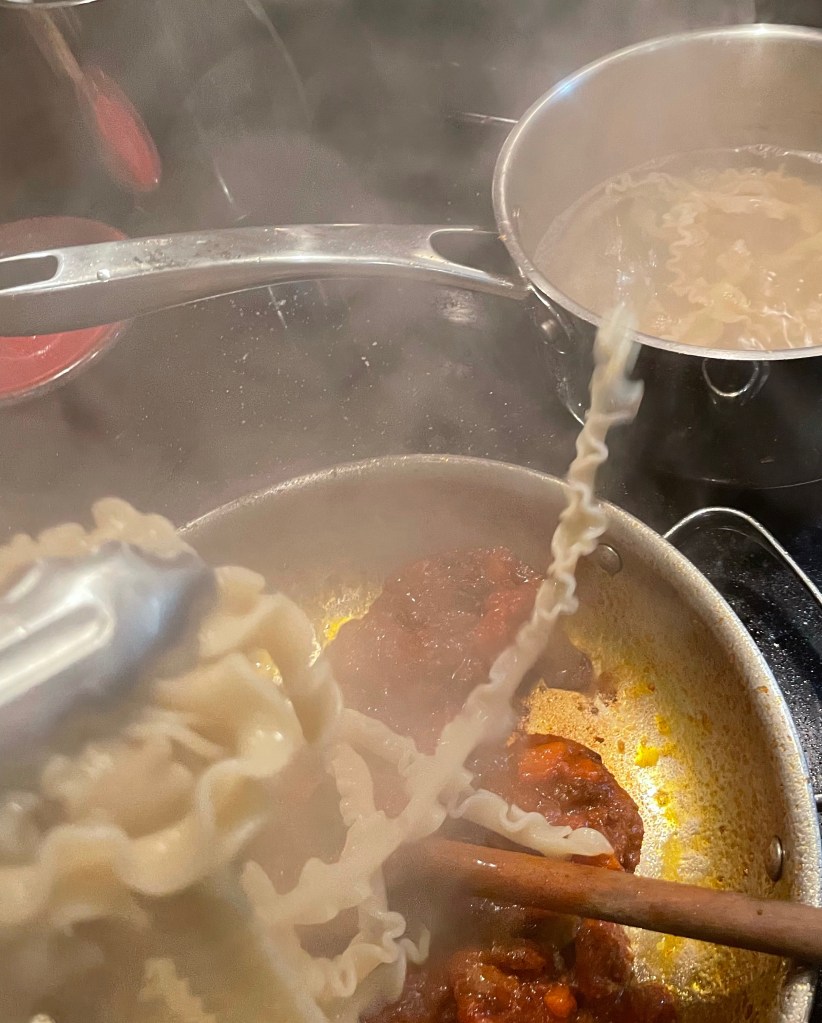
13. Right before serving, turn the heat off and add the cold butter to the pasta and toss vigorously. Plate as desired and grate part on top to serve
My Leap of Faith

That late August Georgia day is tattooed onto my brain. It was warm, I was beyond nervous. My fiancé and I piled our lives into a 20 ft U-Haul, filling it only about a quarter capacity. The smaller, more practical truck we rented was unavailable, so they let us “upgrade” to a bigger one. They didn’t account for the extra dollop of anxiety that was plopped onto my plate by that behemoth, making itself comfortable beside my fear of failure, pandemic stress, and the sheer presence of the great unknown. Despite my worst fears, the trip went exactly as smoothly as it could have, which further cemented my decision to make such a dramatic migration. I even got a few days with my Grandma when we passed through Virginia, which worked as a great distraction.

In New York City, we dropped off our stuff at the new apartment and the truck at the closest U-Haul return location. We managed our way back and were left to imagine what lives we had ahead of us in a city crippled by the pandemic. Neither of us had jobs, and there weren’t many available, so taking leaps of faith was going to be the norm for the next year or so. We still aren’t comfortable with that part. What drove it all, defying the fear and anxiety, was a shared love of food and the faith that we would make and eat the best cuisine of our lives. I was going to train as a chef amid a worldwide disaster and industrywide collapse.

A few days went by and I was able to tour the place in which I was meant to hone my craft for the next 6 months. As I took my first steps through those heavy double glass doors, I was overwhelmed by the face of culinary-focused academics staring me down. As I passed endless fully equipped kitchens in my tour, my excitement was overflowing, and I looked at my fiancé and said, “This is where I should be.” After I received my start date and some paperwork to finish before then, we left and I was chomping at the bit for more. We spent the meantime exploring the neighborhood we lived in and we soon learned of the absence of energy in this once bustling city. I saw statistics online that really drove the point home. Despite the seemingly busy subway trains that kept alternating seats empty to combat the spread of Covid, the subway was only seeing a fraction of the riders it saw a year prior. Even Times Square was close to empty.

My first day finally arrives and I get up before the crack of dawn to make it to class a half hour early. I was a little nervous, but mostly excited. I was finally here! I had been waiting for this moment for almost a year, all the while imagining how the universe would find a way to pull the rug out from underneath me. My patience had finally paid off. We learned of knife cuts, stocks, sauces, cooking methods, regional dishes and much more, but what I’ll remember most about this time in my life are the relationships that I made. A native New Yorker classmate of mine told me, “I’m sorry you have to see the city this way, it’s a shitshow.” I told her there was no need to apologize, I saw past the tragedy and tried to focus on the beauty of the city in pain.

We often discussed our hopes and wishes that everything would be cleared up enough for us to have proper externships and find good jobs after school. Did we all really decide to go to school during a pandemic? Was it something we would grow to regret? I still don’t know the answer to the latter, but yeah we did it. We picked the most hopeless time to start careers in a tough, yet rewarding industry. And who knows, maybe we picked a perfect time. We’ll see businesses revive and mourn the ones we lost forever. We will build a palace on the ruins that are a pre-Covid world. Every chef that graced our classroom with their knowledge and experiences told us what would be expected of us young cooks. We’re the ones that will rebuild and permeate the industry with our talents and bring it back to life like a phoenix emerging from a pile of discarded masks and faded lines of floor tape.